


Introduction
truck servicing Levin is an important part of keeping commercial vehicles safe, dependable, and ready for regular work. Proper servicing can help identify developing mechanical problems, maintain vehicle performance, and reduce the likelihood of unexpected downtime.
For truck operators, fleet managers, and businesses moving freight through Levin and surrounding areas, servicing should be treated as an ongoing maintenance process rather than something done only when a vehicle breaks down. Engine condition, brakes, tyres, suspension, steering, transmission, electrical systems, fluids, and other components all require appropriate attention.
This guide explains what Truck Servicing Levin involves, what a professional service may include, how often heavy vehicles should be checked, how servicing relates to Certificate of Fitness requirements, and how operators can choose a suitable workshop. It also covers common warning signs, maintenance mistakes, practical servicing steps, and ways to make truck maintenance more predictable.
What Is Truck Servicing Levin?
Truck servicing is the planned inspection, maintenance, adjustment, and replacement of components needed to keep a heavy vehicle operating safely and reliably.
A proper service is more than simply changing engine oil. Depending on the truck, its age, mileage, operating conditions, manufacturer recommendations, and previous maintenance history, a service may involve checking the engine, cooling system, brakes, steering, suspension, drivetrain, tyres, electrical components, fluids, filters, and other systems.
For commercial operators, regular servicing can also make it easier to maintain maintenance records and identify recurring faults before they become major repair problems.
What Does a Truck Service Usually Include?
The exact service procedure varies between truck makes and models. However, a professional inspection may include:
- Engine oil and filter inspection or replacement
- Coolant and cooling-system checks
- Fuel-system inspection
- Air-filter condition checks
- Battery and charging-system checks
- Brake-system inspection
- Steering and suspension checks
- Tyre condition and pressure checks
- Wheel and wheel-nut inspection
- Transmission and clutch assessment
- Differential and driveline inspection
- Lights and electrical-system checks
- Fluid and lubricant inspections
- Undercarriage inspection
- Diagnostic scanning where appropriate
- Inspection for leaks, wear, damage, or unusual noises
The mechanic should follow the vehicle manufacturer’s service information where applicable rather than applying the same maintenance procedure to every truck.
Why Regular Truck Servicing Levin Matters in Levin
Regular truck servicing can help operators detect problems while they are still manageable. A worn belt, fluid leak, damaged suspension component, brake issue, or driveline fault can become significantly more disruptive if it is ignored.
NZ Transport Agency Waka Kotahi states that regular vehicle maintenance is sound business practice because it can support fuel efficiency and help prevent avoidable and costly breakdowns.
For businesses that depend on trucks for deliveries, construction, freight, agriculture, or other commercial activities, an unexpected breakdown can affect schedules and operating costs.
Key Benefits of Preventive Maintenance
A structured maintenance program can provide several practical benefits:
Improved reliability: Regular inspections help identify worn or damaged components before they cause larger failures.
Reduced unexpected downtime: Preventive maintenance can reduce the likelihood of discovering a serious fault during an important delivery or workday.
Better safety: Brake, tyre, steering, suspension, wheel, and lighting checks help identify safety-related issues.
More predictable costs: Planned maintenance makes it easier to budget for routine servicing and component replacement.
Longer component life: Correct lubrication, adjustments, and timely replacement can help prevent unnecessary wear.
Better records: Documented maintenance provides useful information about recurring problems and previous repairs.
What Is Checked During Truck Servicing Levin?

A comprehensive service should consider the truck as a complete operating system rather than focusing only on the engine.
Engine and Cooling System
The engine is one of the most important areas of a truck service. Mechanics may inspect oil condition, coolant levels, belts, hoses, filters, leaks, and other components according to the manufacturer’s maintenance schedule.
Overheating, excessive smoke, poor acceleration, unusual engine noise, or increased oil consumption should not be ignored.
A cooling-system problem can become particularly serious if the truck continues operating under heavy loads or demanding conditions.
Brakes
Brake maintenance is essential for heavy vehicles because trucks operate with significant mass and may carry substantial loads.
A brake inspection can include brake components, air systems where applicable, pads or linings, discs or drums, hoses, chambers, and related components.
Heavy vehicle brake testing is also an important part of New Zealand’s Certificate of Fitness inspection system.
If a driver notices reduced braking performance, unusual noises, pulling to one side, vibration, or warning indicators, the vehicle should be assessed promptly.
Tyres and Wheels
Tyres affect braking, handling, stability, and overall road safety. During servicing, technicians can check tread condition, inflation, uneven wear, damage, and other visible issues.
Wheel security is also important. NZTA guidance notes that heavy vehicle wheels must be correctly fitted and maintained and recommends following manufacturer instructions and using suitable torque procedures.
Drivers should also perform appropriate pre-trip checks rather than relying entirely on scheduled workshop servicing.
Suspension and Steering
Suspension components support vehicle stability, handling, and load control. Steering components are equally important because faults can affect the driver’s ability to control the truck.
A truck service may look for:
- Worn bushes
- Damaged shock absorbers
- Loose or damaged components
- Uneven tyre wear
- Steering play
- Suspension air leaks
- Abnormal ride height
- Damaged mounting components
Ignoring these symptoms can allow a relatively manageable problem to become more expensive.
Transmission and Driveline
The transmission, clutch, differential, driveshafts, and associated components transfer power from the engine to the wheels.
Warning signs can include:
- Difficulty changing gears
- Gear slipping
- Clutch engagement problems
- Unusual vibration
- Knocking sounds
- Fluid leaks
- Driveline noise
NZTA specifically advises that heavy vehicle driveshafts and components such as universal joints need appropriate maintenance and regular checking.
Electrical and Diagnostic Systems
Modern trucks can contain numerous electronic control systems and sensors. A warning light may indicate a relatively simple issue, but it can also point to a fault requiring professional diagnosis.
Diagnostic equipment can help technicians identify stored fault codes and investigate electronic problems. However, scan-tool results should be considered alongside physical inspection and the manufacturer’s diagnostic procedures.
Truck Servicing Levin and Certificate of Fitness
Truck Servicing Levin and Certificate of Fitness inspections are related, but they are not the same thing.
A CoF is a formal inspection designed to check whether qualifying vehicles meet required safety standards. Heavy vehicles require a CoF in New Zealand.
Routine servicing should therefore not be postponed until the next CoF inspection. NZTA explains that operators are responsible for keeping vehicles up to the required standard between inspections.
A good maintenance approach is to use scheduled servicing, driver inspections, fault reporting, and appropriate compliance inspections together.
How Often Should a Truck Be Serviced?
There is no single service interval that applies to every truck.
The correct interval depends on factors such as:
- Manufacturer recommendations
- Truck age
- Engine type
- Mileage or operating hours
- Load weight
- Driving conditions
- Stop-start operation
- Long-distance use
- Towing requirements
- Environmental conditions
- Previous maintenance history
The best starting point is the manufacturer’s maintenance schedule.
For trucks working under demanding conditions, operators may need more frequent inspections or maintenance than a basic schedule suggests. NZTA’s servicing guidance also notes that some heavy vehicle components may require checks more frequently depending on operating circumstances.
Signs Your Truck Needs Servicing
Some problems provide warning signs before a major failure occurs.
Look for:
1. Warning Lights
Engine, transmission, brake, or other warning lights should be investigated rather than ignored.
2. Unusual Noise
Knocking, grinding, squealing, rattling, or unusual driveline noises can indicate developing mechanical problems.
3. Fluid Leaks
Oil, coolant, fuel, transmission fluid, or other leaks should be identified and repaired appropriately.
4. Reduced Performance
Poor acceleration, excessive fuel consumption, rough running, or difficulty climbing hills may indicate an engine, fuel, transmission, or other issue.
5. Steering Problems
Excessive play, vibration, pulling, or unusual steering response requires attention.
6. Uneven Tyre Wear
Uneven wear may indicate alignment, suspension, tyre pressure, or other mechanical problems.
7. Brake Changes
Longer stopping distances, unusual noises, vibration, or brake warning indicators should be treated seriously.
A Practical Truck Servicing Levin Process
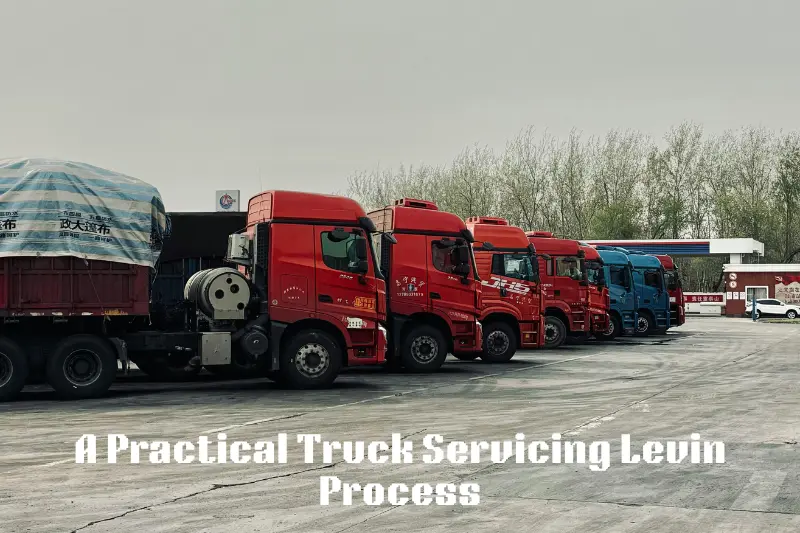
A structured servicing process can make maintenance easier to manage.
Step 1: Review the Truck’s History
Check previous service records, repairs, mileage, operating hours, and recurring faults.
Step 2: Discuss Driver Complaints
Drivers often notice changes in vehicle behaviour before a fault becomes obvious during routine inspection. Record concerns such as noise, vibration, starting problems, warning lights, or handling changes.
Step 3: Carry Out a Visual Inspection
The technician should inspect relevant components for leaks, damage, wear, loose fittings, and other visible problems.
Step 4: Perform Scheduled Maintenance
Complete required oil, filter, lubrication, inspection, and adjustment work according to the manufacturer’s recommendations.
Step 5: Diagnose Reported Faults
Use suitable diagnostic equipment and physical testing when warning lights or performance issues are present.
Step 6: Repair Safety-Critical Problems
Brake, steering, tyre, suspension, wheel, and other safety-related faults should receive appropriate priority.
Step 7: Record the Work
Keep a clear record of servicing, parts replaced, faults identified, and recommended follow-up work.
Step 8: Plan the Next Service
Set the next maintenance date or mileage target so the truck does not fall outside its planned maintenance cycle.
How to Choose a Truck Servicing Provider in Levin
Choosing the right workshop can influence both maintenance quality and downtime.
When comparing truck servicing Levin providers, consider:
Heavy vehicle experience: Look for technicians familiar with commercial trucks and the systems used by your fleet.
Diagnostic capability: Modern trucks may require suitable electronic diagnostic equipment.
Clear communication: A professional workshop should explain identified faults and recommended repairs in understandable language.
Maintenance records: Detailed service records make future diagnosis and fleet management easier.
Parts quality: Ask what replacement parts and lubricants are being used and whether they meet the required specifications.
Service planning: A workshop that can help schedule future maintenance can be valuable for commercial operators.
Emergency support: Businesses operating on tight schedules may also benefit from knowing whether roadside assistance or breakdown support is available.
Common Truck Maintenance Mistakes
Even businesses with regular servicing schedules can make avoidable mistakes.
Waiting for a Breakdown
Servicing only after a truck stops working can turn a manageable maintenance issue into an expensive repair.
Ignoring Small Symptoms
A minor vibration, fluid leak, or unusual noise can be an early warning sign.
Treating the CoF as a Service
A compliance inspection should not replace routine maintenance. The vehicle needs to remain in an appropriate condition between inspections.
Using the Wrong Fluids or Parts
Incorrect oil, coolant, filters, lubricants, or components can cause compatibility or performance problems. Follow manufacturer specifications.
Poor Record Keeping
Without maintenance records, it becomes harder to determine when components were replaced or whether a recurring problem has already been investigated.
Neglecting Driver Checks
Workshop servicing is important, but drivers should still carry out appropriate pre-trip inspections and report defects.
For related information, readers can explore truck repair Levin for repair-related guidance, truck mechanic Levin for professional heavy vehicle maintenance information, and mobile truck mechanic Levin when roadside or on-site assistance is needed. These pages can help readers understand different maintenance and repair options before arranging professional Truck Servicing Levin.
For official information about heavy vehicle maintenance, Certificate of Fitness requirements, and servicing considerations in New Zealand, refer to NZ Transport Agency Waka Kotahi – Certificate of Fitness.
Tips for Better Fleet Maintenance
A simple maintenance system can make Truck Servicing Levin easier to control across multiple vehicles.
- Keep a separate maintenance record for each truck.
- Record mileage and operating hours where applicable.
- Note every recurring fault.
- Encourage drivers to report unusual sounds or handling changes.
- Schedule servicing before major work periods.
- Check tyres and wheels regularly.
- Do not postpone safety-related repairs.
- Follow manufacturer maintenance instructions.
- Keep CoF information and expiry dates organised.
- Review maintenance costs periodically to identify recurring failures.
For larger fleets, maintenance-management software can also help organise service dates, inspection records, repair histories, vehicle availability, and maintenance reminders.
Truck Servicing Levin for Different Types of Operators
Different truck users have different maintenance priorities.
Freight Operators
Freight trucks may accumulate substantial mileage, making scheduled engine, drivetrain, tyre, brake, and suspension checks particularly important.
Construction Businesses
Construction trucks can operate in demanding environments where dust, heavy loads, rough surfaces, and frequent stopping can increase component wear.
Agricultural Operators
Agricultural vehicles may experience seasonal usage and periods of heavy work. Inspection before intensive operating periods can help identify problems that developed during storage or previous use.
Small Business Fleets
For small operators, a documented maintenance schedule can prevent important servicing tasks from being forgotten when the owner is managing several business responsibilities.
How to Reduce Truck Downtime
Reducing downtime begins with planning rather than reacting to breakdowns.
First, establish a service schedule based on the manufacturer’s recommendations and actual operating conditions. Next, keep accurate records of completed work and upcoming maintenance.
Drivers should have a straightforward method for reporting faults. A simple report covering warning lights, unusual noises, vibration, handling changes, leaks, and performance problems can give technicians useful information before the truck reaches the workshop.
It is also helpful to prioritise repairs. Safety-critical faults should be addressed immediately, while non-critical maintenance can be scheduled around operational requirements when appropriate.
Frequently Asked Questions
What does truck servicing Levin include?
Truck servicing Levin can include inspections and maintenance of the engine, fluids, filters, brakes, tyres, suspension, steering, transmission, driveline, electrical systems, and other components. The exact work depends on the truck’s manufacturer requirements, mileage, operating conditions, service history, and any problems reported by the driver.
How often should a truck be serviced?
Truck Servicing Levin intervals vary according to the manufacturer’s recommendations and how the vehicle is used. High-mileage, heavily loaded, or demanding operations may require more frequent inspections. Operators should follow the manufacturer’s service schedule and adjust maintenance planning when operating conditions or recurring faults indicate additional attention is needed.
Is Truck Servicing Levin the same as a CoF inspection?
No. Routine servicing is ongoing maintenance designed to keep a vehicle operating safely and reliably. A Certificate of Fitness is a formal inspection for qualifying vehicles to confirm that required safety standards are met. Regular servicing should continue between CoF inspections rather than being replaced by them.
What are the signs that a truck needs immediate attention?
Important warning signs include brake problems, steering changes, serious fluid leaks, overheating, unusual grinding or knocking, significant vibration, warning lights, tyre damage, and major loss of performance. A truck showing a potentially dangerous fault should be assessed promptly rather than continuing normal operation until the next scheduled service.
Can regular servicing reduce truck breakdowns?
Regular servicing can help identify worn, damaged, or developing faults before they become major failures. It cannot guarantee that a truck will never break down, because components can fail unexpectedly. However, preventive maintenance, driver checks, accurate records, and timely repairs can make vehicle reliability more predictable.
Conclusion
Truck servicing Levin is an important part of responsible commercial vehicle ownership. Regular maintenance helps operators monitor vehicle condition, identify developing problems, manage repair costs, and keep trucks prepared for demanding work.
A strong maintenance approach combines manufacturer-recommended servicing, driver inspections, professional diagnostics, timely repairs, accurate records, and appropriate compliance checks. Operators should not wait for a breakdown or rely solely on a Certificate of Fitness inspection to identify maintenance needs.
The practical next step is to review each truck’s service history, check its manufacturer’s maintenance requirements, note any current warning signs, and arrange a professional inspection when servicing is due. A proactive maintenance routine can help keep commercial vehicles safer, more reliable, and ready for the road.

1 Comment
Pingback: Certificate of Fitness Truck Levin: 7 Essential Tips & Guide