


Introduction
truck engine diagnostics levin is the process of identifying faults affecting a truck’s diesel engine, fuel system, electrical components, sensors, turbocharger, emissions equipment, and related systems. Instead of replacing parts based only on symptoms, proper diagnosis uses visual inspections, measurements, testing equipment, and diagnostic trouble codes to identify the actual cause.
Accurate diagnosis matters because a truck can show similar symptoms for very different reasons. Poor acceleration might come from restricted fuel flow, a faulty injector, a boost leak, a sensor problem, or an electrical issue. Finding the correct cause helps reduce unnecessary repairs and prevents a minor fault from developing into a more serious engine performance problem.
This guide explains diesel troubleshooting, warning lights, fuel-system diagnosis, electrical testing, turbocharger faults, sensor problems, diagnostic scanners, and practical maintenance. It is useful for truck owners, fleet operators, drivers, workshop staff, and anyone researching Levin truck mechanic services for diesel vehicle maintenance.
What Is Truck Engine Diagnostics Levin?
truck engine diagnostics levin refers to a structured process used to find the source of engine and vehicle faults. A technician normally combines a diagnostic scanner with physical inspections and mechanical or electrical tests.
Modern diesel trucks contain electronic control units (ECUs) that monitor engine parameters such as fuel pressure, boost pressure, coolant temperature, air intake, exhaust conditions, and engine speed. When the ECU detects an abnormal reading, it may store a diagnostic trouble code (DTC).
A scanner can retrieve these codes, but a code alone does not always identify the failed component. For example, a sensor-related code may result from a damaged sensor, wiring fault, poor connection, contamination, or another mechanical problem affecting the sensor reading.
A proper diagnosis therefore usually involves:
- Reading stored and pending diagnostic trouble codes.
- Reviewing live sensor data.
- Checking wiring, connectors, fuses, and grounds.
- Testing fuel pressure and fuel delivery.
- Inspecting intake and boost systems.
- Checking turbocharger operation.
- Comparing measured values with manufacturer specifications.
- Clearing codes only after the underlying problem has been addressed.
The goal is not simply to turn off a warning light. The goal is to understand why the fault occurred.
Why Does Truck Engine Diagnostics Levin Matter?
truck engine diagnostics levin can help identify problems before they become expensive or cause unexpected downtime. Commercial trucks often operate under demanding conditions, so small changes in engine performance deserve attention.
Accurate diagnosis can help with:
- Reduced downtime: Identifying the actual fault can prevent repeated trial-and-error repairs.
- Better fuel efficiency: Correcting injector, air-intake, fuel-pressure, or sensor problems may restore efficient engine operation.
- Improved performance: Diagnosis can identify causes of hesitation, poor acceleration, rough running, or reduced power.
- Safer operation: Some engine and electrical faults can affect vehicle reliability.
- Better maintenance decisions: Test results provide useful information for deciding whether a component needs adjustment, repair, or replacement.
For trucks operating around Levin and wider road routes, early attention to unusual engine behaviour can be especially useful. A vehicle that feels different under load should not automatically be assumed to have a major engine failure. Testing should establish the cause first.
When Should a Truck Be Diagnosed?
A truck should be checked when it develops persistent symptoms such as:
- Engine warning lights.
- Difficult starting.
- Excessive or unusual smoke.
- Loss of engine power.
- Poor acceleration.
- Rough or unstable idling.
- Increased fuel consumption.
- Turbocharger noise.
- Unusual engine knocking or vibration.
- Repeated limp-mode activation.
- Intermittent electrical faults.
Some faults appear only when the engine is hot, under load, or at particular engine speeds. That is why reproducing the symptom during testing can be as important as reading stored codes.
Common Problems Found During Truck Engine Diagnostics Levin

Diesel engines can develop mechanical, fuel, electronic, and air-management faults. truck engine diagnostics levin can help separate these possibilities rather than treating every symptom as the same problem.
Fuel-System Faults
Fuel-system problems are common causes of hard starting, poor acceleration, rough running, and reduced power.
Potential causes include:
- Blocked fuel filters.
- Contaminated diesel fuel.
- Air entering the fuel system.
- Low fuel pressure.
- High-pressure pump problems.
- Faulty injectors.
- Damaged fuel lines.
- Electrical faults affecting fuel-system components.
Injector problems can cause uneven combustion, increased smoke, poor performance, or difficult starting. Testing should determine whether the injector itself is faulty or whether another problem is causing incorrect fuel delivery.
Turbocharger and Boost Problems
A turbocharger supplies compressed air to the engine. If boost pressure is lower than expected, the truck may feel weak, particularly during acceleration or when carrying a heavy load.
Possible causes include:
- Split or loose boost hoses.
- Intake leaks.
- Wastegate or actuator problems.
- Variable-geometry turbocharger faults.
- Damaged turbocharger components.
- Restricted air filters.
- Sensor or control-system problems.
A useful diagnostic approach compares commanded boost with actual boost and checks the complete air path. Replacing a turbocharger without checking hoses, controls, sensors, and intake restrictions can lead to an unnecessary repair.
Sensor and Electrical Faults
Modern diesel engines depend on sensors to provide information to the ECU. Common examples include crankshaft position, camshaft position, coolant temperature, intake-air temperature, boost-pressure, airflow, and exhaust-related sensors.
Electrical problems can be caused by:
- Broken or damaged wiring.
- Corroded connectors.
- Poor grounds.
- Blown fuses.
- Low battery voltage.
- Charging-system problems.
- Faulty relays.
- Damaged sensors.
A diagnostic scanner may show a sensor code, but electrical testing is still required. Measuring voltage, resistance, continuity, or signal behaviour can help determine whether the problem is the sensor or its circuit.
How Is Truck Engine Diagnostics Levin Performed?
truck engine diagnostics levin normally begins with the customer’s description of the problem. A technician should establish when the symptom started, whether it happens continuously or intermittently, and whether it appears during starting, idling, acceleration, or heavy loads.
A practical diagnostic process includes several stages.
Initial Inspection
The technician checks the engine bay and surrounding components for obvious problems. This can reveal loose connectors, damaged hoses, fluid leaks, damaged wiring, low fluid levels, or signs of overheating.
The truck’s service history can also provide useful clues. Recent repairs, component replacements, fuel-system work, or electrical repairs may be relevant.
Diagnostic Scanner Testing
A suitable diagnostic scanner can communicate with the truck’s ECU and retrieve stored, pending, or historical fault codes.
Live data can be even more useful because it shows what the system is doing while the engine operates. Depending on the vehicle, useful readings may include:
- Engine speed.
- Coolant temperature.
- Fuel pressure.
- Intake pressure.
- Airflow.
- Throttle or accelerator position.
- Exhaust-related parameters.
- Battery and charging voltage.
Codes should be interpreted alongside symptoms and test results rather than treated as automatic instructions to replace a part.
Mechanical and Pressure Testing
Some faults cannot be confirmed electronically. Mechanical tests may include compression testing, fuel-pressure measurement, intake-pressure testing, cooling-system checks, or other manufacturer-approved procedures.
These tests help determine whether the problem is mechanical, hydraulic, pneumatic, or electronic.
Road or Load Testing
If safe and appropriate, testing under operating conditions can help reproduce faults that do not appear while the truck is stationary. Power loss that only occurs during acceleration or hill climbing may provide important diagnostic information.
Testing should always be performed safely and in accordance with applicable road and workplace requirements.
Diesel Troubleshooting for Engine Performance Problems
Diesel troubleshooting should start with the symptom rather than an assumption about the failed part. For example, black smoke generally indicates an air-fuel imbalance or incomplete combustion, but the exact cause requires investigation.
For a truck with poor power, possible areas to check include:
- Air filter restriction.
- Fuel filter condition.
- Fuel pressure.
- Injector performance.
- Turbocharger boost.
- Intake leaks.
- Exhaust restrictions.
- Sensor signals.
- ECU-related faults.
- Mechanical engine condition.
For difficult starting, the diagnostic process may focus on battery voltage, starter speed, fuel delivery, fuel pressure, injector operation, engine timing signals, glow or preheating systems where applicable, and compression.
A useful rule is to verify basic conditions before replacing expensive components. Correct fuel supply, sufficient battery voltage, proper air supply, and reliable electrical connections are fundamental to diesel engine operation.
What Do Engine Warning Lights Mean?
Engine warning lights indicate that the vehicle’s electronic control system has detected a condition requiring attention. The exact meaning depends on the truck and its warning-light system.
A warning light does not automatically mean the engine is about to fail. However, ignoring a persistent warning can allow a developing fault to become more serious.
Drivers should pay attention to changes occurring with the warning light, including:
- Sudden loss of power.
- Unusual smoke.
- High engine temperature.
- Strange noises.
- Rough running.
- Reduced acceleration.
- Limp mode.
- Multiple warning lights appearing together.
A flashing or severe warning should be treated more urgently than a minor intermittent indication. If the truck shows signs of overheating, severe mechanical noise, loss of control-related functions, or another serious safety concern, stopping safely and obtaining professional assistance is preferable to continuing to drive.
For information about road safety, transport requirements, and vehicle-related guidance in New Zealand, consult the Waka Kotahi NZ Transport Agency.
Benefits and Limitations of Truck Engine Diagnostics Levin
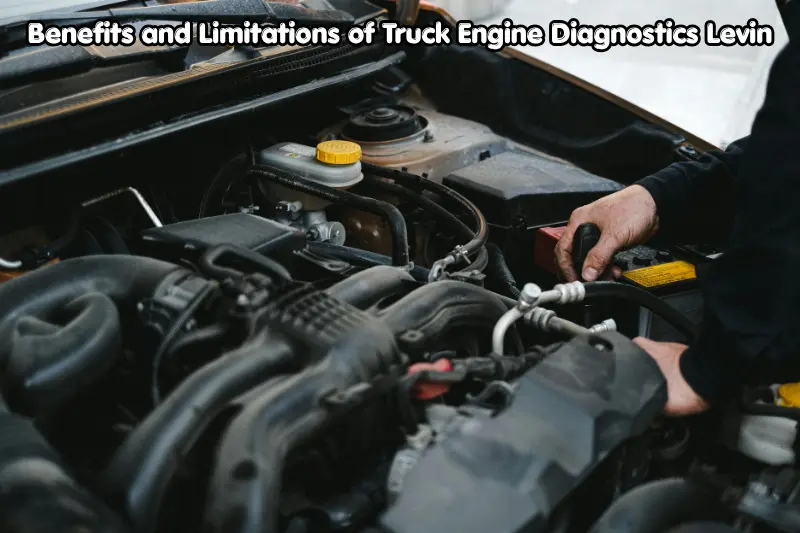
truck engine diagnostics levin offers several advantages, but diagnostic equipment is not a replacement for mechanical expertise.
The main benefits include:
- Faster identification of electronic faults.
- Better understanding of stored fault codes.
- Access to live engine information.
- More targeted component testing.
- Reduced reliance on guesswork.
- Better documentation of recurring faults.
However, there are limitations. A scanner cannot physically inspect a damaged hose, blocked filter, worn mechanical component, or poor electrical connection. Some intermittent faults may disappear before testing. Generic scanners may also provide less information than manufacturer-level diagnostic equipment.
That means the strongest approach combines electronic diagnosis with visual inspection, electrical testing, mechanical checks, and professional judgement.
Common Diagnostic Mistakes to Avoid
One of the most expensive mistakes is replacing parts simply because a fault code appears to relate to that component. A diagnostic code usually identifies a system condition, not necessarily the exact failed part.
Other mistakes include:
- Clearing codes before recording them.
- Ignoring freeze-frame information.
- Failing to inspect wiring.
- Replacing injectors without testing fuel pressure.
- Replacing a turbocharger without checking boost hoses.
- Ignoring battery and charging voltage.
- Testing only when the engine is cold.
- Failing to verify the repair after completion.
- Continuing to drive despite severe symptoms.
Good diagnosis follows evidence. The technician forms a possible cause, performs an appropriate test, evaluates the result, and then moves to the next step if necessary.
Maintenance Tips to Reduce Diesel Engine Problems
Preventive maintenance cannot eliminate every fault, but it can reduce avoidable problems and help identify changes early.
Useful practices include:
- Replace fuel filters according to the vehicle manufacturer’s schedule.
- Use appropriate diesel fuel from reliable sources.
- Check engine oil and coolant regularly.
- Inspect air filters and intake components.
- Look for damaged hoses and loose clamps.
- Monitor unusual smoke or changes in engine sound.
- Keep battery terminals and electrical connections clean.
- Pay attention to warning lights.
- Record recurring faults and repair history.
- Have persistent performance changes investigated promptly.
Maintenance records are particularly valuable for commercial trucks because repeated symptoms may reveal patterns that are difficult to identify from a single inspection.
Professional Advice for Diesel Fault Diagnosis
truck engine diagnostics levin should be approached as a diagnostic process rather than a simple scanner check. A professional assessment is particularly useful when a fault is intermittent, involves multiple systems, returns after repairs, or causes significant power loss.
A qualified technician can combine scan-tool information with electrical measurements, pressure tests, visual inspection, mechanical testing, and manufacturer specifications. This approach is more reliable than changing parts until the symptom disappears.
Professional diagnosis is also advisable when the truck has serious warning lights, severe overheating, major fluid leaks, unusual mechanical noise, substantial smoke, or sudden loss of performance. Continuing to operate a truck with a serious fault can increase repair costs and may create a safety risk.
Frequently Asked Questions
What is diesel fault diagnosis?
Diesel fault diagnosis is the process of identifying the cause of a diesel engine or vehicle problem. It may involve diagnostic scanners, fault-code analysis, live data, fuel-pressure testing, electrical measurements, visual inspection, and mechanical tests. The objective is to identify the underlying fault so the correct repair can be completed instead of replacing parts based only on symptoms.
How can truck engine diagnostics levin find common diesel problems?
truck engine diagnostics levin can help identify common diesel problems by combining fault-code scanning with physical testing. Problems such as injector faults, fuel-pressure issues, sensor failures, turbocharger faults, wiring problems, and air-intake restrictions can produce similar symptoms, so diagnostic testing helps separate one possible cause from another.
Can a diagnostic scanner find every truck engine problem?
No. A diagnostic scanner is valuable for electronic faults and live data, but it cannot identify every mechanical or physical problem. A damaged hose, restricted filter, compression problem, poor electrical connection, or mechanical wear may require additional testing. The most reliable diagnosis combines scan-tool information with inspection and appropriate mechanical or electrical tests.
Why does my truck have power loss and an engine warning light?
Power loss combined with an engine warning light can result from fuel-delivery problems, turbocharger faults, sensor errors, air restrictions, electrical issues, emissions-system faults, or other engine conditions. Reading the diagnostic codes and checking live data is a useful starting point, but the code should be confirmed with appropriate testing before parts are replaced.
When should I seek professional diesel diagnosis?
Professional diesel diagnosis is recommended when a fault is persistent, intermittent, difficult to identify, or accompanied by significant power loss, severe smoke, overheating, unusual mechanical noise, or repeated warning lights. A technician can perform systematic testing and determine whether the problem involves fuel, air, electrical, electronic, turbocharger, or mechanical systems.
Conclusion
Accurate truck engine diagnostics levin can make diesel troubleshooting more systematic by combining diagnostic codes, live data, visual inspection, fuel testing, electrical checks, turbocharger assessment, and mechanical testing. Warning lights, power loss, difficult starting, rough running, smoke, and poor fuel economy should be treated as symptoms that require investigation rather than automatic evidence of a specific failed part.
For truck owners and operators around Levin, timely diagnosis can help prevent unnecessary component replacement and identify faults before they become more disruptive. Basic maintenance remains essential, but persistent or serious symptoms deserve professional attention.
If your truck needs a structured diagnostic assessment or further diesel repair guidance, Truck Mechanic Levin can be a useful next step for finding relevant local truck service information.
