

Introduction
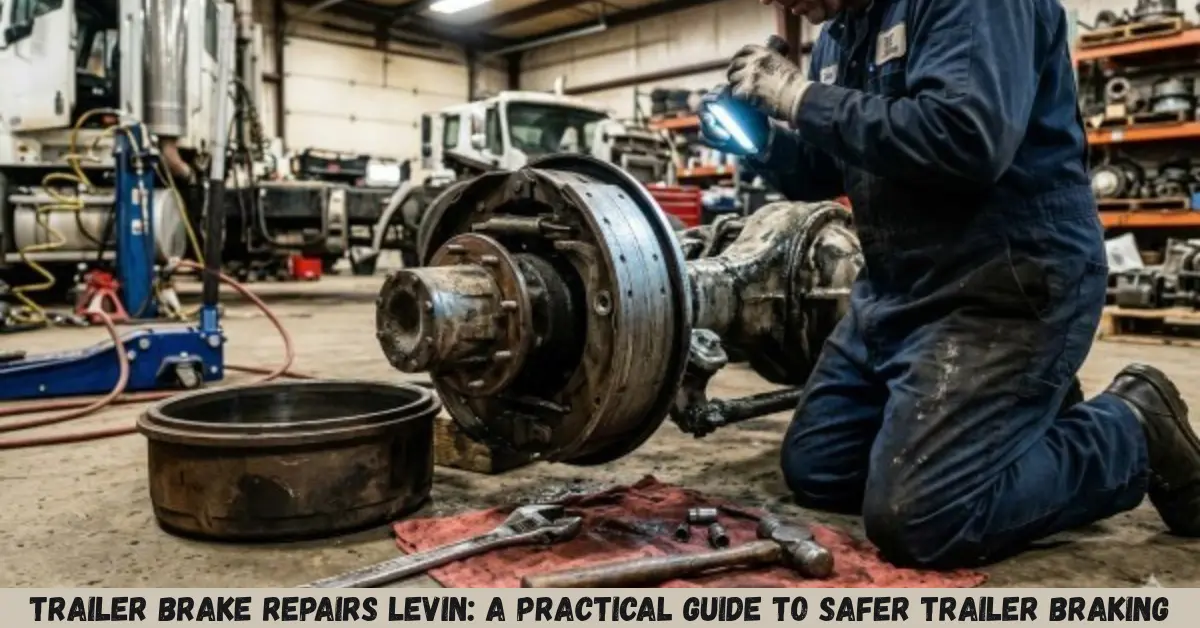
Trailer brake repairs Levin are important whenever a trailer develops braking problems, unusual noises, uneven braking, or reduced stopping performance. A trailer’s braking system helps control its weight and maintain stability, particularly when carrying heavy loads or travelling at higher speeds.
This guide explains how trailer brakes work, the most common problems that can require trailer brake repairs Levin, warning signs that should not be ignored, what a professional inspection involves, and how regular maintenance can help prevent expensive failures. It also covers practical safety tips, common repair mistakes, and frequently asked questions.
Although the information is useful for readers researching trailer servicing from India and other locations, the basic mechanical principles apply broadly. Local road rules, inspection requirements, and repair standards can differ, so vehicle owners should always follow the regulations applicable to where their trailer is registered and operated.
What Are Trailer Brakes?

Trailer brakes are braking components fitted to a trailer to help slow or stop it independently or in coordination with the towing vehicle. Depending on the trailer design, braking systems can include electric brakes, hydraulic brakes, mechanical components, drums, shoes, discs, magnets, cables, or other control equipment.
The braking system is particularly important because the towing vehicle is not the only mass that needs to be controlled. A loaded trailer can significantly increase the total combination weight.
A properly functioning system should:
- Apply braking force consistently.
- Release correctly when braking stops.
- Provide balanced braking across the trailer.
- Minimise excessive wheel or component wear.
- Help maintain trailer stability.
- Respond appropriately to the towing vehicle’s brake controller or mechanical system.
When one part becomes worn or damaged, the entire braking system can perform poorly.
Why Are Trailer Brake Repairs Important?
Trailer brake repairs are important because braking faults can affect stopping control, trailer stability, tyre wear, and the condition of other braking components.
A small issue can sometimes develop into a larger mechanical problem. For example, worn brake shoes may reduce braking efficiency while continued operation can contribute to additional wear inside the drum.
Regular inspection can help identify problems before they become more serious.
Better Braking Performance
Good brake adjustment and correctly functioning components help the trailer slow more predictably.
Improved Trailer Control
Uneven braking can cause the trailer to pull or behave unpredictably. Properly maintained brakes help maintain more consistent behaviour during deceleration.
Reduced Component Wear
Brake components are designed to work together. A damaged drum, worn shoe, faulty magnet, seized mechanism, or poorly adjusted system can place additional stress on other parts.
Greater Confidence While Towing
A driver is more likely to maintain proper control when the trailer braking system has been inspected and maintained correctly.
Common Signs You May Need Trailer Brake Repairs Levin
Identifying warning signs early can make repairs simpler and potentially reduce the risk of further damage.
1. Reduced Braking Performance
If the trailer does not slow as expected when the brakes are applied, the system should be inspected.
Possible causes include:
- Worn brake shoes or pads
- Incorrect adjustment
- Damaged drums or discs
- Faulty electric brake components
- Hydraulic problems
- Wiring faults
- Mechanical binding
Do not assume reduced braking is simply caused by a heavy load.
2. Pulling to One Side
If the trailer appears to pull left or right when braking, braking force may not be evenly distributed.
This can happen when one wheel has a different braking response from another. A professional inspection can determine whether the problem involves adjustment, wear, contamination, electrical supply, or another component.
3. Grinding or Scraping Noises
Unusual grinding or scraping sounds should not be ignored.
They may indicate severe wear, damaged components, foreign material, or contact between components that should normally have controlled clearance.
Continuing to tow without identifying the source can make the eventual repair more complicated.
4. Excessive Heat Around a Wheel
A wheel or brake assembly that becomes unusually hot can indicate a brake that is not releasing correctly.
Possible causes include a sticking mechanism, incorrect adjustment, bearing-related issues, or another mechanical fault.
If one side is significantly hotter than the other, professional inspection is especially important.
5. Brake Controller Problems
Trailers equipped with electric brakes may depend on a brake controller in the towing vehicle.
Warning signs can include:
- Brakes activating inconsistently
- Little or no braking response
- Sudden braking
- Controller fault indications
- Intermittent electrical operation
The problem may be within the trailer wiring, connectors, magnets, controller, power supply, or grounding.
6. Excessive Trailer Movement During Braking
A trailer that feels unstable when slowing down should be checked promptly.
Brake imbalance is one possible cause, although tyre condition, suspension, load distribution, wheel bearings, and other mechanical factors can also influence trailer behaviour.
Main Types of Trailer Brake Problems
Different braking systems have different failure points. Understanding the basic categories can help owners communicate the problem more effectively to a mechanic.
Electric Trailer Brake Problems
Electric brakes commonly use an electromagnet to activate braking components when electrical current is supplied.
Potential problems include:
- Damaged wiring
- Poor electrical connections
- Faulty magnets
- Corroded connectors
- Poor grounding
- Incorrect adjustment
- Brake controller issues
Electrical diagnosis should normally include checking connections and voltage as well as examining the mechanical brake assembly.
Hydraulic Brake Problems
Hydraulic systems use fluid pressure to operate braking components.
Potential problems may involve:
- Fluid leaks
- Damaged hoses
- Air in the system
- Worn hydraulic components
- Corrosion
- Incorrect adjustment
Hydraulic faults require careful inspection because fluid loss can significantly affect braking performance.
Mechanical Brake Problems
Mechanical systems may use cables, linkages, springs, levers, or other mechanical components.
Problems can develop when parts become worn, corroded, bent, seized, or incorrectly adjusted.
What Happens During Trailer Brake Repairs Levin?
A professional repair process should begin with diagnosis rather than immediately replacing parts.
Step 1: Initial Inspection
The technician should assess the trailer’s overall braking condition and ask about symptoms such as pulling, noise, weak braking, overheating, or intermittent operation.
Step 2: Brake Component Inspection
Depending on the system, the inspection may include:
- Brake shoes or pads
- Drums or rotors
- Magnets
- Springs
- Adjusters
- Cables
- Hydraulic components
- Wiring
- Connectors
- Wheel-end components
Step 3: Electrical Testing
For electric brakes, electrical connections and the brake circuit should be checked.
This can help identify issues that may not be visible during a basic visual inspection.
Step 4: Mechanical Adjustment
Some trailer braking systems require correct adjustment to provide appropriate braking performance.
Adjustment should follow the specifications applicable to the particular brake assembly.
Step 5: Replacement of Damaged Parts
Worn or damaged components may need replacement rather than adjustment.
A good repair should address the underlying cause instead of simply treating the most obvious symptom.
Step 6: Testing
After repairs, the braking system should be tested to confirm that it operates correctly and consistently.
Where applicable, testing should also verify that braking is balanced across the trailer.
Trailer Brake Repairs vs Routine Brake Maintenance
Repairs and maintenance are related but not identical.
| Trailer Brake Repairs | Routine Brake Maintenance |
|---|---|
| Fixes an identified fault | Helps prevent faults |
| Usually follows a symptom or inspection finding | Performed periodically |
| May involve replacing damaged parts | Often involves inspection and adjustment |
| Can require electrical or mechanical diagnosis | Focuses on condition and correct operation |
| Usually needed when performance has deteriorated | Helps maintain existing performance |
Regular maintenance does not guarantee that a component will never fail, but it can make developing problems easier to identify.
Benefits of Professional Trailer Brake Repairs
Professional servicing can provide several practical advantages.
Accurate Diagnosis
Brake problems can have multiple possible causes. A technician can inspect the complete system rather than replacing parts based only on symptoms.
Correct Parts Selection
Using components that are appropriate for the trailer’s braking system is important for safe and reliable operation.
Proper Adjustment
Incorrect adjustment can cause weak braking, dragging brakes, or uneven braking. Correct procedures help the system operate as intended.
Identification of Related Problems
During a brake inspection, a technician may identify other issues affecting trailer safety, such as damaged wiring, worn tyres, wheel-end problems, or suspension concerns.
Limitations and Costs to Consider
Brake servicing is not always limited to replacing a single inexpensive component.
The final repair requirement can depend on:
- Trailer type
- Brake system design
- Extent of wear
- Parts availability
- Electrical condition
- Corrosion
- Previous repairs
- Load requirements
- Labour involved in diagnosis
A trailer with multiple damaged components may require more extensive work than one needing a simple adjustment.
The cheapest repair is not necessarily the best repair if it leaves the underlying safety problem unresolved.
How to Maintain Trailer Brakes
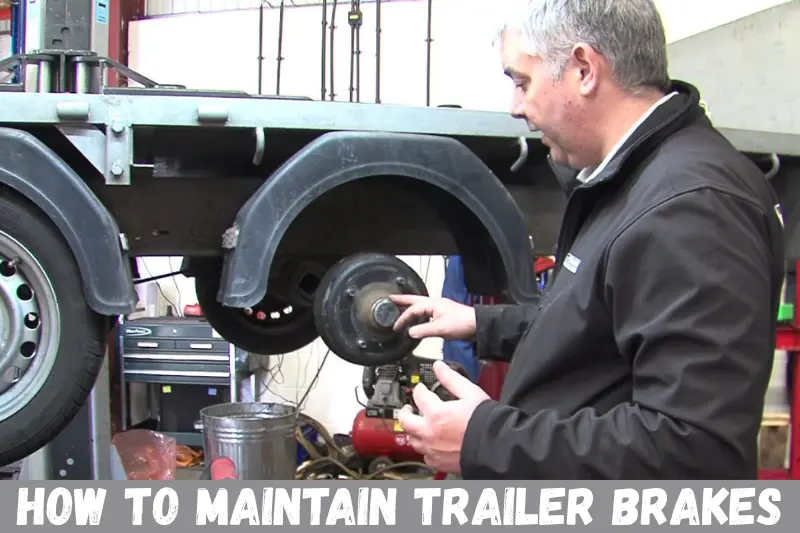
Good maintenance starts with regular observation and inspection.
Check for Warning Signs
Before towing, pay attention to changes in braking behaviour, unusual sounds, wheel heat, or electrical problems.
Keep Electrical Connections Protected
For electric brake systems, connectors and wiring should be kept in good condition and protected from avoidable damage, moisture, and corrosion.
Inspect Wear Components
Brake shoes, pads, drums, rotors, magnets, springs, and adjusters can wear over time.
The correct inspection interval depends on the trailer, braking system, operating conditions, and manufacturer’s recommendations.
Avoid Overloading
A trailer should be loaded within its legal and mechanical limits. Excessive weight increases the demands placed on the entire towing combination, including the braking system.
Check Load Distribution
Even when the total weight is within limits, poor load distribution can affect trailer handling.
Heavy items should be positioned according to the trailer and towing vehicle manufacturer’s guidance.
Common Mistakes to Avoid
Ignoring Small Brake Noises
A minor noise may be the first indication of wear or damage. Waiting until braking performance becomes poor can increase the repair requirement.
Replacing Parts Without Diagnosis
Replacing a component simply because it appears worn may not fix the actual problem.
For example, an electrical fault can sometimes produce symptoms that appear to be a mechanical brake issue.
Using Incorrect Components
Brake components should be suitable for the specific trailer and braking system. Compatibility matters for proper operation.
Poor Brake Adjustment
Over-adjustment can cause dragging, heat, and accelerated wear, while insufficient adjustment can reduce braking performance.
Continuing to Tow With a Serious Fault
If the trailer has severely reduced braking, obvious damage, significant overheating, or another serious fault, it should not simply be kept in service until convenient.
Safety should take priority over completing a journey.
How to Choose a Trailer Brake Repair Service
When looking for trailer brake repairs Levin, consider more than price alone.
Look for a service provider that:
- Understands trailer braking systems.
- Diagnoses faults before recommending repairs.
- Uses suitable replacement components.
- Explains the problem clearly.
- Checks the complete braking system when appropriate.
- Provides practical maintenance advice.
- Works according to applicable safety and legal requirements.
It is also useful to provide the technician with specific symptoms. Explain when the problem occurs, whether it happens under light or heavy braking, and whether the issue is constant or intermittent.
Safety Tips Before Towing
A quick inspection before a journey can help identify obvious problems.
Check:
- Trailer brake operation.
- Tyre condition and inflation.
- Wheel and bearing condition where applicable.
- Safety chains and coupling.
- Trailer lights and electrical connections.
- Load security.
- Brake controller operation where fitted.
- Any unusual noise, smell, heat, or vibration.
These checks do not replace professional servicing, but they can help identify issues before a longer trip.
Internal link
Keeping your trailer braking system in good condition is essential for safe towing. If you notice reduced braking performance, unusual noises, pulling, or excessive heat, professional trailer brake repairs Levin can help identify and resolve the problem. For additional information about safe vehicle operation and transport requirements, you can also refer to the New Zealand Transport Agency.
Frequently Asked Questions
What are the most common reasons for trailer brake repairs?
Common causes include worn brake shoes or pads, incorrect adjustment, damaged drums or rotors, electrical faults, faulty magnets, corroded connections, hydraulic leaks, and mechanical components that have become worn or seized. The exact cause depends on the trailer’s braking system and should be confirmed through inspection rather than assumed from symptoms alone.
How do I know if my trailer brakes need attention?
Reduced braking performance, pulling to one side, unusual grinding or scraping, excessive heat around a wheel, inconsistent electric braking, and abnormal trailer movement can all indicate a problem. If braking behaviour changes noticeably, arrange an inspection before continuing to use the trailer for demanding journeys.
Can trailer brakes be adjusted instead of replaced?
Sometimes. If the braking components are still within acceptable condition, correct adjustment may restore proper operation. However, adjustment cannot safely compensate for severely worn, damaged, contaminated, or defective parts. A proper inspection should determine whether adjustment, cleaning, repair, or component replacement is appropriate.
How often should trailer brakes be inspected?
There is no single interval that applies to every trailer. Inspection frequency depends on the trailer, braking system, mileage, load, operating environment, and manufacturer’s recommendations. Trailers used frequently, heavily, or in demanding conditions may require closer monitoring. Always follow the applicable maintenance schedule and legal requirements.
Is it safe to tow a trailer with faulty brakes?
A trailer with a significant braking fault should not simply be treated as normal until the problem is repaired. Brake performance affects the complete towing combination, so continuing to operate with a serious fault can increase safety risks. If braking is severely reduced or unpredictable, have the trailer inspected and repaired before use.
Expert Tips for Better Trailer Brake Care
Tip 1: Treat changes as warning signs.
If the trailer suddenly feels different during braking, investigate the change rather than adapting your driving around it.
Tip 2: Diagnose before replacing.
A complete inspection can prevent unnecessary parts replacement.
Tip 3: Consider the entire braking system.
Electrical, hydraulic, and mechanical components can interact. Repairing only the most visible problem may not resolve the underlying fault.
Tip 4: Keep records.
Recording inspections, repairs, component replacements, and maintenance can make it easier to monitor recurring problems.
Tip 5: Check before long journeys.
A short inspection before towing can provide an opportunity to identify obvious problems before they become inconvenient or dangerous.
Conclusion
Trailer brake repairs Levin are an important part of responsible trailer maintenance. Braking problems can involve worn friction components, incorrect adjustment, electrical faults, hydraulic issues, damaged drums or discs, or mechanical problems. Because several components work together, accurate diagnosis is more useful than replacing parts based only on symptoms.
Owners should pay attention to warning signs such as weak braking, pulling, unusual noises, excessive heat, inconsistent electric brakes, and unexpected trailer movement. Regular inspections, correct adjustments, suitable replacement parts, proper loading, and timely repairs can help maintain reliable braking performance.
For the next step, inspect the trailer for obvious warning signs and check its maintenance requirements. If the braking system is showing unusual behaviour, arrange a qualified inspection before continuing to use the trailer, particularly for heavy loads or longer journeys. Always follow the relevant manufacturer’s instructions and local road-safety requirements.
