

Introduction
Pre cof repairs levin are an important part of preparing trucks, trailers, buses, and other applicable heavy vehicles for a Certificate of Fitness (CoF) inspection in New Zealand. A pre-CoF check gives owners and operators an opportunity to identify safety or compliance problems before the official inspection.
A Certificate of Fitness confirms that applicable vehicles meet required safety standards. NZ Transport Agency Waka Kotahi states that CoF requirements cover areas such as tyres, brakes, structural condition, towing connections, lights, glazing, steering, suspension, fuel systems, and other safety-related components.
For vehicle owners in Levin and the wider Horowhenua area, arranging suitable inspection preparation can reduce unexpected problems, help organise repairs in advance, and make vehicle compliance easier to manage.
What Are Pre COF Repairs in Levin?
Pre COF Repairs Levin are mechanical, electrical, structural, or safety-related repairs completed after checking a vehicle before its official Certificate of Fitness inspection.
A pre-CoF inspection is not the same as the official CoF. It is a preparation check designed to identify possible defects early. The vehicle can then be repaired before being presented for its formal inspection.
For example, a technician may discover worn tyres, damaged lights, leaking components, loose suspension parts, brake problems, damaged load restraints, or other issues. Fixing these problems before the official inspection can help prevent avoidable delays.
A professional pre-CoF process generally involves:
- Inspecting important safety systems
- Identifying potential compliance problems
- Recording repairs that may be required
- Prioritising safety-critical work
- Completing approved repairs
- Checking the vehicle again before the official CoF
This approach can be particularly useful for commercial operators because an unexpected inspection failure may create additional downtime and require another visit.
Why Are Pre COF Repairs Levin Important?
Pre COF Repairs Levin are important because a vehicle must remain in a condition that meets applicable CoF requirements, not simply become compliant on the day of inspection.
Waka Kotahi explains that vehicle owners are responsible for keeping their vehicles up to CoF condition at all times. A current CoF is also required for applicable vehicles to legally operate on New Zealand roads, subject to the relevant rules.
Reduce Unexpected Inspection Problems
A pre CoF inspection can reveal issues that might otherwise be discovered during the official inspection.
Finding a problem early gives the operator time to arrange parts, labour, and repairs without waiting until the inspection has already failed.
Minimise Vehicle Downtime
For businesses that depend on trucks or commercial vehicles, downtime can affect schedules, deliveries, customers, and operating costs.
Completing repairs before the scheduled CoF can make the process more predictable.
Improve Safety
The purpose of CoF requirements is closely connected to vehicle safety. Problems involving brakes, steering, suspension, tyres, lights, structural components, or towing systems should never be treated as minor administrative issues.
Pre CoF preparation provides another opportunity to identify defects before the vehicle returns to regular road use.
Make Repairs Easier to Plan
A detailed inspection can help operators separate urgent repairs from maintenance that can be scheduled later.
This makes it easier to budget for repairs and avoid rushing important work immediately before the CoF inspection.
What Does a Pre COF Repairs Levin Check Usually Cover?
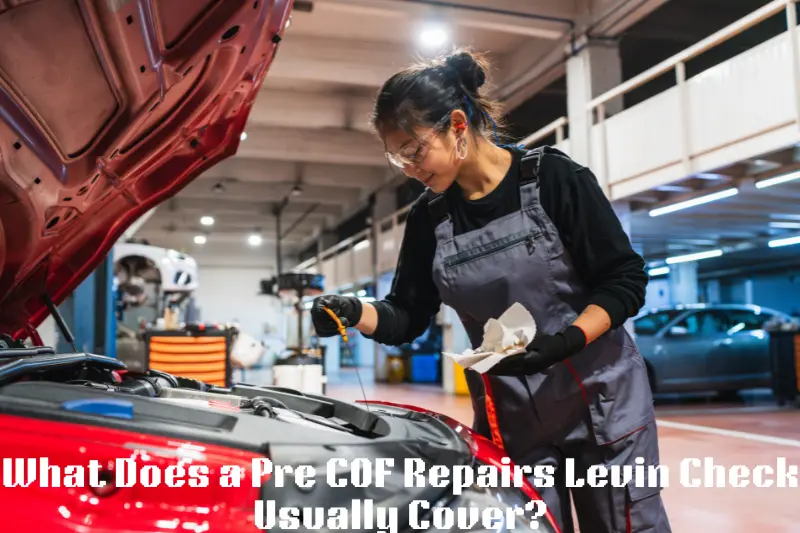
A thorough Pre COF Repairs Levin check should focus on the safety and compliance areas relevant to the vehicle.
Waka Kotahi lists several inspection areas for CoF inspections, including tyres, brakes, structural condition, towing connections, load restraints, lights, glazing, wipers, doors, safety belts, airbags where fitted, speedometers, steering, suspension, exhaust, and fuel systems.
Brakes and Brake Components
Brake performance is one of the most important areas to assess before a CoF.
A technician may check the general condition and operation of the braking system and look for signs of wear, damage, leaks, or other issues that could affect safe operation.
Brake problems should be addressed promptly rather than waiting for the official inspection to identify them.
Tyres and Wheels
Tyres should be checked for tread condition, damage, uneven wear, inflation, and other visible concerns.
Waka Kotahi specifically identifies tyre condition and tread depth as part of the CoF inspection requirements.
Operators should also pay attention to unusual tyre wear because it may indicate problems elsewhere, such as alignment, suspension, steering, or wheel-related components.
Steering and Suspension
Steering and suspension systems affect vehicle control, stability, and handling.
A Pre COF Repairs Levin inspection can identify worn, damaged, loose, or insecure components before the vehicle reaches the official inspection.
For heavy vehicles that regularly carry substantial loads, suspension maintenance is especially important because components can experience significant operating stress.
Lights and Electrical Systems
A simple lighting problem can create an unnecessary inspection issue.
Technicians may check headlights, indicators, brake lights, marker lights, reflectors, and other applicable lighting equipment.
Electrical connections, wiring, switches, and other components should also be checked where problems are suspected.
Windscreen, Glazing and Wipers
The driver’s visibility is an important safety consideration.
The CoF inspection includes glazing and windscreen washers and wipers. Cracks, damage, poor visibility, or ineffective wipers may need attention before the vehicle is presented for inspection.
Structural Condition
Structural condition deserves careful attention, particularly on older heavy vehicles.
Rust, deterioration, damaged mounting areas, and other structural concerns may require professional assessment. Some structural defects can have serious implications for vehicle safety and certification.
Where structural repairs or deterioration are involved, additional repair certification requirements may apply depending on the circumstances. Waka Kotahi provides specific guidance regarding repair certification.
Towing Connections and Load Restraints
Trucks and trailers may rely on towing equipment and load restraint systems that must remain safe and suitable for their intended use.
A Pre COF Repairs Levin check should consider towing connections, relevant certification, load anchorages, bolsters, curtains, and other applicable equipment.
A vehicle can have a mechanically healthy engine and still have compliance problems involving its towing or load-restraint equipment.
Exhaust and Fuel System
Leaks in the exhaust or fuel system can create safety and compliance concerns.
Waka Kotahi states that the exhaust must meet applicable requirements, including having no leaks, while the fuel system must not have leaks.
These systems should therefore be checked before the official inspection, particularly when a vehicle has developed unusual smells, smoke, noises, or visible leaks.
Common Repairs Found Before a CoF
The exact repairs required depend on the vehicle’s condition, age, design, use, and maintenance history. However, common preparation work may involve:
- Brake repairs or servicing
- Tyre replacement
- Light and electrical repairs
- Suspension component repairs
- Steering component repairs
- Windscreen or glazing repairs
- Wiper and washer repairs
- Exhaust repairs
- Fuel-system repairs
- Trailer and towing-equipment repairs
- Load-restraint repairs
- Structural repairs where appropriate
- Door and safety-belt repairs
A professional inspection should determine what actually needs attention rather than replacing parts unnecessarily.
Pre COF Repairs Levin: Step-by-Step Process
The preparation process can be straightforward when it is planned properly.
1. Schedule a Pre-CoF Inspection
Arrange an inspection before the official CoF appointment. Allow enough time for repairs and parts sourcing if problems are found.
2. Inspect the Vehicle
A technician checks the relevant safety and compliance areas of the vehicle.
The inspection should be appropriate to the vehicle type and the requirements that apply to it.
3. Identify Required Repairs
Problems should be documented clearly. Safety-critical defects should normally receive priority over cosmetic or non-essential work.
4. Complete the Repairs
Approved repairs should be completed using suitable parts, tools, and procedures.
Where specialist certification is required, the operator should ensure the appropriate process is followed rather than treating the repair as ordinary maintenance.
5. Recheck the Vehicle
After repairs, the vehicle should be checked again to make sure the identified problems have been properly addressed.
6. Attend the Official CoF Inspection
Once the vehicle is prepared, it can be presented to an approved inspection organisation for the formal CoF inspection.
A Pre COF Repairs Levin inspection does not guarantee that the vehicle will pass because the official inspection remains the final assessment.
Pre COF Repairs Levin Inspection vs Official CoF
| Pre-CoF Inspection | Official CoF Inspection |
|---|---|
| Preparation check before certification | Formal certification inspection |
| Helps identify potential problems | Determines whether requirements are met |
| Repairs can be arranged afterward | Vehicle may be rejected if requirements are not met |
| Helps operators plan maintenance | Provides the actual CoF outcome |
| Not a replacement for CoF | Required for applicable vehicles |
VINZ describes a Pre COF Repairs Levin inspection as a check of a heavy goods or passenger service vehicle before the official CoF, allowing identified problems to be repaired before certification.
Benefits of Choosing Professional COF Repairs in Levin
Professional preparation can offer several practical benefits.
Better Repair Planning
A clear inspection report can help an operator understand what needs attention and decide how to schedule the work.
Fewer Last-Minute Surprises
Identifying problems early gives you more time to arrange repairs.
Improved Vehicle Reliability
Correcting safety and mechanical issues can support better vehicle reliability during normal operation.
Easier Fleet Maintenance
For operators with several vehicles, regular Pre COF Repairs Levin checks can become part of a wider preventive maintenance program.
Local Convenience
Using a suitable repair provider in Levin can make it easier for local operators to coordinate inspection preparation, repairs, and routine maintenance.
Important Limitations of a Pre COF Repairs Levin Check

A pre-CoF inspection is useful, but it should not be misunderstood.
First, it does not guarantee a CoF pass. The official inspector makes the final decision according to the applicable inspection requirements.
Second, a CoF itself is not a complete mechanical health inspection. Waka Kotahi notes that a CoF does not cover every aspect of vehicle condition, including detailed assessment of engine, clutch, gearbox, differential, lubricant condition, and some other maintenance matters.
For this reason, operators should combine CoF preparation with regular servicing and preventive maintenance.
How to Choose a Pre COF Repairs Levin Provider in Levin
When comparing repair providers, consider more than price.
Look for a workshop that has suitable experience with the type of vehicle you operate and understands heavy-vehicle compliance requirements.
Useful questions include:
- Does the workshop handle heavy vehicles and trailers?
- Can it inspect the vehicle before CoF?
- Can it complete common repairs in-house?
- Does it provide a clear repair assessment?
- Can it handle electrical and mechanical faults?
- Does it understand relevant certification requirements?
- Can it work around commercial operating schedules?
- Are repair recommendations explained clearly?
A provider should be transparent about what is required and should not recommend unnecessary work simply because an inspection is approaching.
Common Mistakes to Avoid
Waiting Until the Last Minute
Booking a pre-CoF check only a day before the official inspection leaves little time for unexpected repairs.
Checking Only the Brakes
Brakes are important, but CoF requirements cover many other areas. Lights, tyres, steering, suspension, structural condition, glazing, towing connections, and other components can also matter.
Ignoring Small Warning Signs
A leaking component, faulty light, unusual tyre wear, or steering noise should not automatically be dismissed as minor.
Treating CoF as a Full Service
Passing a CoF does not mean every mechanical component has been inspected for long-term reliability.
Regular servicing remains important.
Using the Cheapest Repair Without Considering Quality
A low-cost repair that does not properly address the underlying problem can create additional expense later. Safety-related repairs should be completed appropriately and professionally.
Tips for Keeping a Vehicle CoF-Ready
Operators can make future inspections easier by building simple checks into normal vehicle maintenance.
Before each working period, drivers can perform suitable walk-around checks for obvious issues such as damaged lights, tyres, leaks, loose components, or other visible defects.
Maintenance records should also be kept organised. Recording repairs, servicing, inspections, and recurring problems can help technicians identify patterns.
Waka Kotahi also highlights the importance of walk-round condition checks and notes that defects identified during roadside or other compliance checks can lead to instructions to repair or, for serious defects, restrictions on vehicle operation.
For complete vehicle maintenance support, explore our related services for truck servicing, heavy vehicle repairs, truck brake repairs, truck suspension repairs, and trailer repairs. These services can help vehicle owners identify mechanical and safety issues before they become more serious and support better preparation for a Certificate of Fitness inspection.
For accurate and up-to-date information about Certificate of Fitness requirements in New Zealand, vehicle owners should refer to NZ Transport Agency Waka Kotahi. Its official guidance explains CoF requirements, inspection areas, vehicle-owner responsibilities, and certification information.
Frequently Asked Questions
What are Pre COF Repairs Levin in Levin?
Pre COF Repairs Levin in Levin are repairs completed after checking a vehicle before its official Certificate of Fitness inspection. They can involve brakes, tyres, lights, steering, suspension, glazing, towing equipment, structural components, exhaust systems, and other applicable areas. The goal is to identify and correct potential problems before the formal inspection.
Is a pre-CoF inspection the same as a Pre COF Repairs Levin?
No. A pre-CoF inspection is a preparation check designed to identify potential problems before the official inspection. The formal CoF is the certification process conducted by an approved inspection organisation. A pre-CoF can help prepare the vehicle, but it cannot guarantee that the vehicle will pass the official inspection.
Which vehicles need a Certificate of Fitness in New Zealand?
CoF requirements apply to several vehicle categories, including heavy vehicles such as trucks and larger trailers, passenger service vehicles, and rental vehicles. The exact requirements and inspection frequency depend on the vehicle and its use. Vehicle owners should check current Waka Kotahi guidance for the rules that apply to their specific vehicle.
How early should I arrange Pre COF Repairs Levin repairs?
It is sensible to arrange a pre-CoF inspection with enough time to complete unexpected repairs before the official appointment. The ideal timing depends on the vehicle’s condition, workshop availability, parts requirements, and the type of repairs needed. Fleets may benefit from scheduling checks as part of their regular maintenance planning.
Does passing a Pre COF Repairs Levin mean the truck does not need servicing?
No. A CoF is not a complete mechanical service or a full assessment of every component. Waka Kotahi specifically explains that a CoF does not cover some areas such as detailed engine, clutch, gearbox, and differential condition. Regular servicing and preventive maintenance should continue even after a vehicle receives a CoF.
Conclusion
Pre cof repairs levin can make Certificate of Fitness preparation more organised and predictable for truck, trailer, bus, and other applicable vehicle operators. A pre-CoF inspection provides an opportunity to identify potential problems involving brakes, tyres, steering, suspension, lights, glazing, structural condition, towing equipment, exhaust systems, and other safety-related areas.
The most practical approach is to inspect the vehicle early, prioritise safety-critical repairs, complete the required work properly, and have the vehicle rechecked before its official CoF appointment. Remember that a pre-CoF check does not guarantee certification, and a CoF should not replace routine servicing.
If your vehicle is approaching its CoF date, the next practical step is to arrange a professional pre-CoF assessment early enough to allow time for any necessary repairs.
