


Introduction
onsite truck servicing levin provides a practical way to maintain or repair heavy vehicles without always taking them to a traditional workshop. Instead of waiting for a truck to be transported to a garage, a qualified mobile mechanic can travel to a suitable location and carry out many servicing, diagnostic, repair, and breakdown tasks on site.
This approach can be particularly useful for transport operators, construction businesses, farms, contractors, and fleet managers who need to reduce vehicle downtime. Local providers in Levin and the wider Horowhenua region offer mobile diesel servicing, repairs, hydraulic work, and breakdown assistance for trucks and industrial machinery.
This guide explains what onsite truck servicing involves, which jobs can usually be completed on location, its main benefits and limitations, how to prepare for a service, and what to look for when choosing a truck servicing provider.
What Is Onsite Truck Servicing in Levin?
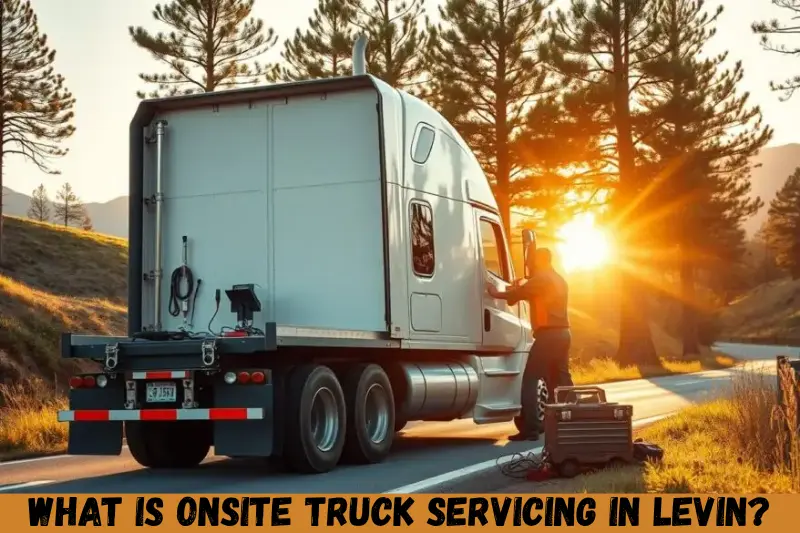
Onsite truck servicing is a mobile maintenance and repair service where a qualified mechanic travels to the truck rather than requiring the vehicle to be taken to a workshop.
The mechanic may arrive at a depot, farm, construction site, roadside location, or another suitable work area with tools, diagnostic equipment, lubricants, replacement components, and other service equipment.
Depending on the problem and available equipment, onsite servicing can include:
- Routine diesel servicing
- Oil and filter changes
- Engine diagnostics
- Brake-related repairs
- Electrical troubleshooting
- Cooling-system repairs
- Clutch and transmission work
- Hydraulic hose repairs
- General mechanical repairs
- Emergency breakdown assistance
- Preventive maintenance inspections
Levin Truck Services, for example, describes its mobile diesel servicing and repair capability across Levin, Horowhenua, and surrounding areas, while also providing workshop facilities for jobs requiring more extensive equipment.
How Does Mobile Truck Servicing Work?
The process is straightforward:
- Contact the service provider and explain the truck’s issue.
- Provide the vehicle’s location and registration details where required.
- Describe any warning lights, unusual noises, leaks, or performance problems.
- The mechanic assesses what equipment and parts may be needed.
- The technician travels to the truck.
- The problem is diagnosed and suitable repairs or servicing are completed.
- The vehicle is tested before being returned to operation.
For more complex repairs, the truck may still need to be taken to a workshop. A professional provider should explain this before carrying out major work.
Why Choose Onsite Truck Servicing Levin?
The biggest advantage of onsite truck servicing is convenience. A commercial truck does not have to spend unnecessary time travelling to a workshop when the required repair can safely be completed at its current location.
For businesses that rely on trucks every day, reducing avoidable downtime can be especially valuable.
Minimise Vehicle Downtime
A truck that is sitting unused can disrupt deliveries, construction schedules, agricultural work, or other commercial activities.
With mobile servicing, technicians can travel directly to the vehicle. This can remove the need for arranging transport to a workshop for suitable repairs.
Local providers in Levin advertise mobile servicing and 24/7 breakdown support, reflecting the importance of responding when commercial vehicles experience unexpected problems.
Convenient for Fleets
Fleet operators may have several trucks working from different locations.
Instead of moving each vehicle to a workshop, a mobile mechanic may be able to inspect and service vehicles at the fleet’s depot or operating site.
This can make scheduled maintenance easier to organise.
Useful for Remote Work Sites
Trucks and heavy machinery frequently operate away from major urban centres.
Agricultural properties, construction sites, industrial locations, and roadside breakdowns can all create situations where moving a large vehicle is difficult.
Onsite support allows a mechanic to assess the problem where the truck is located.
Emergency Breakdown Support
Not every truck problem happens during normal working hours.
Some providers serving Levin and Horowhenua advertise 24/7 breakdown assistance, allowing operators to request support when an unexpected mechanical problem occurs.
Emergency servicing does not necessarily mean every repair can be completed at the roadside. Severe mechanical failures may require workshop repairs or vehicle recovery.
What Services Can Be Completed On Site?
The exact services depend on the vehicle, fault, location, technician, and equipment available. However, mobile truck mechanics can often handle a broad range of maintenance and repair tasks.
Diesel Servicing
Routine diesel servicing may include inspection of the engine, oil and filters, lubrication points, fluid levels, and other components according to the manufacturer’s maintenance requirements.
Regular servicing can help identify developing problems before they become larger failures.
Engine Diagnostics
Modern commercial trucks often rely on electronic control systems. Diagnostic equipment can help technicians identify fault codes and investigate problems affecting engine performance.
Professional diagnostic work should involve more than simply reading a fault code. The mechanic should interpret the information alongside physical inspection and the vehicle’s symptoms.
Brake Repairs
Brakes are critical safety components on heavy vehicles.
Depending on the issue, servicing may involve inspection and repair of brake components. However, brake work must be performed by appropriately qualified professionals and checked carefully before the vehicle returns to operation.
Hydraulic Repairs
Hydraulic systems are common on trucks and machinery used for lifting, loading, tipping, and other specialised work.
A damaged hydraulic hose can cause fluid loss and prevent equipment from operating. Mobile hydraulic technicians may be able to repair or replace hoses at the work site.
Levin Truck Services states that its mobile hydraulic repair service can handle hydraulic hoses on equipment including diggers, excavators, loaders, and forklifts.
Electrical Repairs
Electrical problems can affect starting, lighting, sensors, charging systems, and other vehicle functions.
A mobile technician can diagnose many electrical issues at the truck’s location, although complicated electrical faults may require additional workshop equipment.
Cooling-System Repairs
Overheating can quickly become a serious engine problem.
A technician may inspect coolant levels, hoses, radiators, leaks, fans, and related components. If the engine has already suffered major damage, a workshop repair may be necessary.
Onsite Truck Servicing vs Workshop Servicing
Both mobile and workshop servicing have an important role. The right choice depends on the type of work required.
| Factor | Onsite Truck Servicing | Workshop Servicing |
|---|---|---|
| Location | Mechanic travels to the truck | Truck travels to workshop |
| Routine maintenance | Often suitable | Suitable |
| Minor repairs | Often suitable | Suitable |
| Diagnostics | Often available | Usually available |
| Emergency breakdowns | Very useful | Less convenient if truck cannot move |
| Major engine work | May require workshop | Usually better suited |
| Heavy fabrication | Limited by mobile equipment | Better equipped |
| Vehicle downtime | Can be reduced for suitable jobs | May involve transport and workshop scheduling |
The most practical approach is often a combination of both. Use mobile servicing for suitable maintenance, diagnostics, and roadside repairs, while using a properly equipped workshop for major mechanical, engineering, or fabrication work.
How to Prepare for Onsite Truck Servicing
Good preparation can help the mechanic diagnose the problem more efficiently.
Record the Symptoms
Before contacting the mechanic, note what happened.
Useful information includes:
- When the problem started
- Whether the truck can still be driven
- Warning lights displayed
- Unusual sounds
- Fluid leaks
- Loss of power
- Starting problems
- Brake or steering concerns
- Recent repairs or maintenance
The more accurate information you provide, the easier it may be for the technician to prepare.
Provide the Exact Location
Give the mechanic a clear location and explain whether the truck is inside a yard, on a roadside, at a farm, or at a construction site.
For a roadside breakdown, provide landmarks or other useful location details.
Make the Vehicle Accessible
If possible, make sure the technician can safely reach the truck.
The working area should provide enough room for the service vehicle and equipment.
Have Vehicle Information Available
The mechanic may need information such as:
- Truck make and model
- Registration number
- Engine type
- Approximate mileage
- Previous service history
- Known faults
- Relevant warning codes
This information can help the technician prepare before arriving.
How to Choose an Onsite Truck Servicing Provider in Levin
Choosing the cheapest provider is not always the best approach. Heavy vehicles require appropriate technical knowledge, equipment, and safety practices.
Check Heavy-Vehicle Experience
Look for a provider with experience working on commercial trucks and industrial vehicles rather than relying solely on general automotive experience.
Ask About Mobile Capabilities
Not every mobile mechanic offers the same services.
Ask whether the provider can handle:
- Diesel servicing
- Diagnostics
- Hydraulic repairs
- Electrical faults
- Brake repairs
- Emergency breakdowns
- Fleet maintenance
Confirm Availability
If your trucks operate outside standard business hours, ask about emergency or after-hours support.
Some Levin-based providers advertise 24/7 breakdown assistance.
Ask About Workshop Backup
A strong mobile service can be even more useful when it has access to a workshop for repairs that cannot safely or efficiently be completed on site.
For example, Levin Truck Services operates a workshop with a large vehicle pit and engineering capabilities for more extensive jobs.
Check Certification and Compliance Requirements
Truck maintenance is not simply about making a vehicle run.
Commercial vehicles may have inspection, safety, certification, and regulatory requirements depending on their use and jurisdiction.
For vehicles operating in New Zealand, a Certificate of Fitness, or CoF, is an important consideration for applicable heavy vehicles. NZTA-related inspection requirements include areas such as tyres, brakes, structural condition, towing connections, lights, steering, suspension, glazing, safety belts, and exhaust systems.
Common Mistakes to Avoid
Ignoring Warning Signs
A warning light, unusual noise, oil leak, or change in engine performance should not automatically be dismissed.
Small symptoms can sometimes indicate a developing mechanical problem.
Waiting Until a Breakdown Happens
Preventive maintenance is generally preferable to relying exclusively on emergency repairs.
A planned maintenance schedule can help identify worn components before they cause an unexpected failure.
Choosing a Mechanic Without Heavy-Vehicle Experience
Trucks are significantly different from ordinary passenger vehicles.
Heavy vehicles involve different systems, loads, components, and maintenance requirements. Choose technicians with appropriate experience for the type of truck being serviced.
Assuming Every Repair Can Be Done On Site
Mobile servicing has practical limits.
Major engine rebuilds, extensive transmission repairs, structural work, specialised fabrication, or repairs requiring large fixed equipment may need a workshop.
A reputable provider should tell you when workshop facilities are necessary.
Focusing Only on Price
The lowest quote may not represent the best overall value.
Consider technician experience, response time, diagnostic capability, parts quality, communication, warranty terms, and the likely effect of downtime on your business.
Benefits for Truck Owners and Fleet Operators
Onsite truck servicing can provide several practical advantages:
- Convenient servicing at the vehicle’s location
- Potentially less downtime for suitable repairs
- Useful support for fleet operators
- Practical assistance during breakdowns
- Mobile hydraulic repair options
- Reduced need to move non-operational vehicles
- Flexible support for farms and industrial sites
- Access to diagnostic and mechanical expertise
The actual benefit depends on the type of repair, the truck’s condition, the provider’s equipment, and the accessibility of the work location.
Limitations of Onsite Truck Servicing
Mobile servicing is highly useful, but it is not a replacement for a fully equipped workshop.
Some repairs require specialised machinery, lifting equipment, large inspection facilities, engineering bays, or controlled workshop conditions.
For example, major structural repairs and complex truck modifications may require dedicated engineering facilities and appropriate certification. Levin Truck Services states that its workshop supports truck and trailer engineering work, including chassis modifications, fabrication, axle conversions, and hydraulic-related projects.
The safest option is to let a qualified technician determine whether the repair is appropriate for onsite work.
Internal link
Looking for reliable truck servicing in Levin? Professional servicing can help identify mechanical issues early and keep commercial vehicles operating safely and efficiently.
For official information about heavy vehicle safety and compliance requirements in New Zealand, visit the New Zealand Transport Agency (NZTA).
Looking for reliable truck servicing in Levin? Professional servicing can help identify mechanical issues early and keep commercial vehicles operating safely and efficiently.
For official information about heavy vehicle safety and compliance requirements in New Zealand, visit the New Zealand Transport Agency (NZTA).
Frequently Asked Questions
What is onsite truck servicing in Levin?
Onsite truck servicing means a qualified mechanic travels to the truck instead of requiring the vehicle to be taken to a workshop. Depending on the problem, the technician may perform routine diesel servicing, diagnostics, mechanical repairs, hydraulic work, or breakdown assistance at the vehicle’s location.
Can a mobile truck mechanic repair a broken-down truck?
Yes, many breakdown problems can be diagnosed and repaired at the vehicle’s location, provided the fault is suitable for mobile repair and the technician has the necessary equipment and parts. Serious engine, transmission, structural, or other complex failures may require vehicle recovery to a properly equipped workshop.
Is onsite truck servicing suitable for fleet maintenance?
Yes. Mobile servicing can be particularly practical for fleets because technicians may service multiple vehicles at a depot or operating location. Fleet operators should discuss maintenance schedules, vehicle access, service records, and recurring problems with the provider to develop an efficient servicing arrangement.
Does onsite servicing include hydraulic repairs?
It can. Mobile hydraulic technicians may inspect, repair, or replace hydraulic hoses and related components at the work site. The exact service depends on the equipment and fault. Some hydraulic or engineering work may still require a workshop with specialised tools and machinery.
How often should a truck be serviced?
The correct service interval depends on the truck manufacturer, engine, operating conditions, mileage, hours, load, and type of work. Always follow the manufacturer’s recommended maintenance schedule and adjust maintenance practices when severe operating conditions require additional attention.
Expert Tips for Better Truck Maintenance
For operators who depend on trucks every day, a proactive maintenance approach can make servicing easier.
Keep accurate service records. Record dates, mileage or operating hours, repairs, parts replaced, and recurring faults.
Do daily checks. Drivers should report obvious issues such as damaged tyres, fluid leaks, warning lights, unusual noises, or lighting problems.
Plan preventive maintenance. Do not wait for a major breakdown before checking important systems.
Build a relationship with a reliable provider. Familiarity with your vehicles can help a servicing team understand recurring problems and maintenance requirements.
Separate urgent repairs from routine work. Safety-related faults should receive immediate attention, while non-critical maintenance can often be scheduled around operating requirements.
Ask questions. A professional mechanic should be able to explain the identified fault, recommended repair, urgency, and likely next steps in understandable language.
Conclusion
Onsite truck servicing levin offers a convenient solution for truck owners, fleet operators, farms, contractors, and businesses that need professional maintenance without unnecessarily moving a vehicle to a workshop. Mobile diesel servicing, diagnostics, mechanical repairs, hydraulic work, and breakdown assistance can all help keep suitable vehicles operational.
However, onsite servicing has limitations. Major engine repairs, structural work, extensive fabrication, and jobs requiring specialised workshop equipment may need to be completed at a dedicated facility. The best servicing provider should therefore offer both practical mobile support and a clear pathway to workshop repairs when necessary.
If you operate a truck in Levin or the wider Horowhenua region, start by identifying your vehicle’s maintenance requirements, keeping accurate service records, and choosing a heavy-vehicle specialist that can respond appropriately to both routine servicing and unexpected breakdowns. Local providers serving the area advertise mobile repairs, diesel servicing, hydraulic support, workshop facilities, and breakdown assistance.
