


Heavy vehicle COF Levin is an important requirement for truck owners, fleet operators, and other heavy vehicle users who need to keep their vehicles safe and legally compliant on New Zealand roads. A Certificate of Fitness, commonly called a CoF, confirms that a vehicle met the required roadworthiness standards at the time of its inspection.
This guide explains what a heavy vehicle CoF involves, which vehicles need one, what inspectors typically check, how often inspections may be required, and how to prepare your vehicle before visiting a CoF inspection provider in Levin. It also covers common inspection failures, practical maintenance tips, and the importance of keeping commercial vehicles in safe operating condition.
Although this article is written for readers in India and elsewhere who may be researching New Zealand heavy vehicle requirements or fleet operations, the rules discussed here apply to vehicles operating under the relevant New Zealand regulatory framework.
According to NZ Transport Agency Waka Kotahi, a Certificate of Fitness is a regular safety inspection for heavy vehicles and other vehicle categories that require a higher level of periodic certification. The exact requirements can depend on the vehicle’s classification and operating circumstances.
What Is a Heavy Vehicle COF?
A heavy vehicle COF Levin inspection helps confirm that qualifying commercial and heavy vehicles meet the required safety and roadworthiness standards. Understanding the purpose of the inspection allows vehicle owners and operators to prepare properly and maintain their vehicles more effectively.
A heavy vehicle Certificate of Fitness is a periodic inspection that checks whether a vehicle meets applicable safety and roadworthiness requirements.
In New Zealand, heavy vehicles generally include vehicles with a gross vehicle mass above 3,500 kg, although specific regulatory classifications and exceptions can apply. Certain vehicles operating under a transport service licence may also require a CoF regardless of weight.
A CoF should not be confused with a complete mechanical health check or a pre-purchase inspection. Its primary purpose is to assess relevant safety and compliance items according to the applicable inspection requirements.
For a business operating trucks or commercial vehicles, staying ready for a heavy vehicle COF Levin inspection can help reduce operational disruption caused by avoidable defects.
Why Is Heavy Vehicle COF Important?
A heavy vehicle COF Levin inspection is important because it supports safer vehicle operation and helps identify safety-related defects before they create bigger problems. Regular inspections and responsible maintenance can also help reduce unexpected vehicle downtime.
A CoF plays an important role in maintaining road safety. Heavy vehicles are larger, heavier, and often operate for long distances while carrying goods or passengers. Mechanical or structural problems can therefore create serious risks.
For truck owners and fleet operators, staying prepared for a heavy vehicle COF Levin inspection is an important part of responsible vehicle management. Regular maintenance, early fault detection, and scheduled safety checks can help reduce unexpected delays and keep commercial vehicles ready for inspection and daily operations.
The inspection process helps identify issues that may affect the safe operation of the vehicle.
Key benefits include:
- Improved road safety
- Better awareness of visible vehicle defects
- Support for legal compliance
- Reduced risk of operating an unsafe vehicle
- Encouragement of regular maintenance
- Better fleet management practices
- Early identification of certain safety-related problems
A current CoF shows that the vehicle was inspected and considered roadworthy at the time of that inspection. However, vehicle owners and operators remain responsible for maintaining the vehicle between inspections.
Which Vehicles May Need a CoF?
Vehicles that require a heavy vehicle COF Levin inspection may include trucks and other qualifying commercial vehicles, depending on their classification and use. Operators should always confirm the current requirements for their specific vehicle type.
Heavy vehicles commonly require a Certificate of Fitness rather than a standard Warrant of Fitness.
Examples can include:
- Trucks
- Larger trailers
- Heavy motorhomes
- Buses
- Other qualifying heavy commercial vehicles
- Certain passenger service vehicles
- Vehicle recovery service vehicles
The exact requirement depends on vehicle classification and how the vehicle is used. NZTA guidance states that vehicles over 3,500 kg gross vehicle mass and vehicles operating under a transport service licence may require a CoF.
Vehicle operators should always confirm the current requirements applicable to their specific vehicle rather than relying only on general descriptions.
What Does a Heavy Vehicle COF Inspection Check?
During a heavy vehicle COF Levin inspection, important safety-related areas of the vehicle are assessed to determine whether applicable standards are being met. Preparing these components in advance can help prevent avoidable inspection issues.
A heavy vehicle CoF inspection examines important safety and compliance areas. The inspection is designed to assess whether relevant systems and components meet required standards.
Common inspection areas can include tyres, brakes, lights, steering, suspension, structural condition, fuel systems and other safety-related equipment.
Tyres and Wheels
Tyres are essential for vehicle control, braking performance and stability. Inspectors may examine tyre condition and other relevant requirements.
Before a heavy vehicle COF Levin appointment, operators should check for:
- Excessive or uneven tyre wear
- Damage to tyres
- Visible defects
- Problems that may affect safe operation
A regular tyre inspection routine can help operators identify problems before the official inspection.
Braking Systems
Brakes are among the most important safety systems on a heavy vehicle. Inspection requirements can include checking the condition and operation of relevant braking components.
Heavy vehicles may require specialised brake testing depending on the vehicle and inspection requirements. NZTA identifies brake testing as an important part of heavy vehicle safety inspection processes.
Fleet operators should not wait until inspection day to discover braking problems. Regular maintenance and early repairs are safer and can help avoid unexpected downtime.
Steering and Suspension
The steering and suspension systems must be safe and secure. Problems in these areas can affect vehicle handling and control.
Warning signs may include:
- Excessive steering play
- Unusual vibrations
- Pulling to one side
- Unusual tyre wear
- Knocking sounds
- Poor handling
Any serious symptoms should be professionally assessed before the vehicle is presented for inspection.
Lights and Electrical Equipment
Heavy vehicles need properly functioning lights for safe operation and visibility.
A practical pre-inspection check should include relevant:
- Headlights
- Brake lights
- Indicators
- Rear lights
- Number plate lights
- Other required lighting equipment
Checking lights regularly is a simple preventive maintenance task that can help identify obvious defects early.
Structural Condition
The structural condition of a heavy vehicle is another important inspection area. Damage or corrosion in certain safety-related areas may affect whether the vehicle meets requirements.
Owners should arrange repairs when structural issues are identified rather than waiting until the next inspection.
Fuel and Exhaust Systems
Fuel systems should not have leaks, and exhaust systems must meet applicable safety requirements. NZTA’s CoF guidance also identifies exhaust condition and fuel-system leaks among the inspection areas.
A visible leak, excessive smoke or unusual exhaust problem should be investigated before inspection.
How to Prepare for Heavy Vehicle COF Levin

Preparing early for a heavy vehicle COF Levin inspection can make the process smoother and help operators identify potential problems before their appointment. Regular checks, timely repairs, and proper maintenance are key parts of good preparation.
The best approach is to prepare the vehicle before the inspection rather than treating the CoF as the first maintenance check.
Preparing for a heavy vehicle COF Levin inspection should begin well before the scheduled appointment. Checking essential safety components, reviewing maintenance records, and fixing known issues in advance can improve inspection readiness and reduce the chances of avoidable failures.
Carry Out a Walk-Around Inspection
A daily or regular walk-around check can help identify visible problems.
Check the vehicle for:
- Tyre damage
- Fluid leaks
- Broken lights
- Loose components
- Visible structural damage
- Problems with load restraints
- Safety equipment concerns
Routine checks can help identify issues before they become larger problems.
Review Maintenance Records
Businesses operating multiple vehicles should maintain clear service records.
Useful information can include:
- Previous inspection reports
- Repair records
- Brake maintenance
- Tyre replacements
- Scheduled servicing
- Defects reported by drivers
A structured maintenance history can make it easier to identify recurring problems.
Check Documentation
Depending on the vehicle and its use, certain documents or information may be relevant to the inspection process.
NZTA guidance notes that heavy vehicles may also need requirements such as a certificate of loading, road user charges licensing where applicable, and an approved hubodometer for relevant vehicles.
Check current requirements for your specific vehicle before attending the inspection.
Repair Known Problems Before the Appointment
If a driver or mechanic already knows about a safety issue, it is usually better to address it before the inspection.
Common examples include:
- Faulty lights
- Worn tyres
- Brake concerns
- Leaks
- Damaged wipers
- Suspension issues
- Exhaust defects
Preventive maintenance can be more efficient than repeated inspection and repair cycles.
Heavy Vehicle COF Levin: A Practical Inspection Checklist
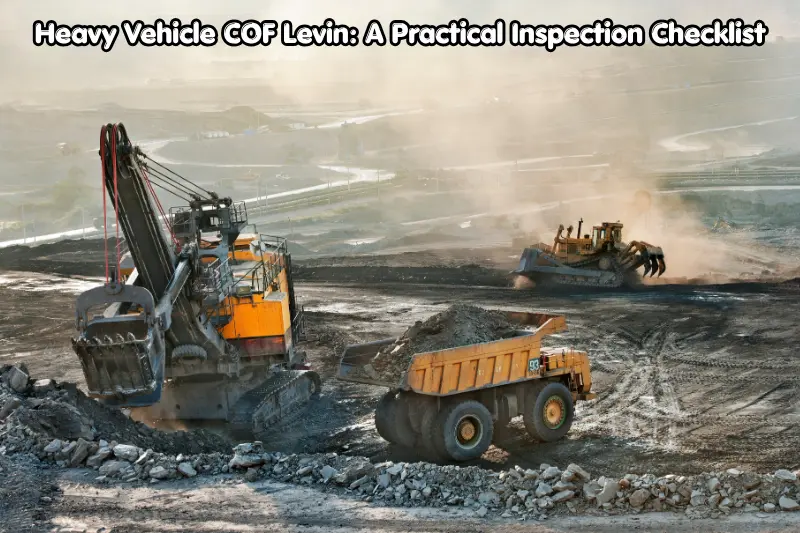
A practical heavy vehicle COF Levin checklist can help drivers and fleet operators review essential vehicle components before inspection. Checking common safety items in advance can save time and reduce the risk of unexpected defects.
Before presenting a vehicle for inspection, operators can use a simple preparation checklist:
- Check that all relevant lights are working
- Inspect tyres for visible damage or excessive wear
- Look for fluid or fuel leaks
- Check the general condition of the vehicle structure
- Test relevant wipers and washers
- Review steering and handling concerns
- Investigate brake warning signs
- Confirm safety belts are in usable condition
- Check required labels and certificates
- Remove unnecessary obstructions that may affect inspection
- Confirm that load-related equipment is in suitable condition
This is only a practical preparation list and does not replace an official inspection.
How Often Is a Heavy Vehicle CoF Required?
The inspection schedule for a heavy vehicle COF Levin can depend on the vehicle type and the applicable regulations. Vehicle owners should regularly check their certificate expiry date and plan inspections early to avoid compliance problems.
The validity period of a CoF can vary.
NZTA guidance states that a CoF may expire between three and twelve months after inspection, depending on the vehicle and applicable circumstances. Heavy vehicles are commonly associated with six-month inspection intervals, while certain private heavy motorhomes may have different inspection frequencies.
Always check the expiry date applicable to your own vehicle rather than assuming every vehicle follows the same schedule.
What Happens if a Heavy Vehicle Fails Its CoF?
If a heavy vehicle COF Levin inspection identifies defects, the vehicle may need repairs before it can successfully complete the required certification process. Understanding the reported issues and addressing them promptly can help minimise operational disruption.
A failed inspection does not necessarily mean that a vehicle has a major mechanical problem. Some failures can involve defects that require repair or correction before the vehicle can pass.
NZTA heavy vehicle guidance states that when a vehicle fails its CoF inspection, the inspection documentation can provide a period for the vehicle to be repaired and returned for re-inspection, subject to the applicable conditions. During this period, restrictions may apply to where and how the vehicle can be driven.
The best response is to:
- Review the inspection findings carefully
- Understand what repairs are required
- Use a qualified repair provider when necessary
- Keep relevant repair documentation
- Arrange re-inspection within the applicable requirements
Do not assume a failed vehicle can continue normal commercial operations without restriction.
Common Mistakes to Avoid Before a CoF Inspection
Avoiding common preparation mistakes can make a heavy vehicle COF Levin inspection less stressful. Regular maintenance and early attention to warning signs are often more effective than waiting until inspection day to identify vehicle problems.
Many inspection problems can be reduced through regular maintenance.
Waiting Until the Expiry Date
Leaving the inspection until the last possible day creates unnecessary pressure. A failure may require repairs and another inspection.
Plan ahead and allow enough time to correct any unexpected defects.
Ignoring Small Warning Signs
Small issues can become larger problems.
Examples include:
- Minor leaks
- Warning lights
- Uneven tyre wear
- Unusual noises
- Poor braking response
- Steering vibration
Early diagnosis is generally better than waiting for the next scheduled inspection.
Treating the CoF as a Full Mechanical Service
A CoF is an important safety inspection, but it is not a complete assessment of every mechanical component.
NZTA specifically explains that a CoF does not assess every aspect of vehicle condition, such as the general condition of the engine, clutch, gearbox or differential.
Regular servicing remains essential.
Forgetting About Compliance Documents
Heavy vehicle operators may need to manage more than the CoF itself. Depending on the vehicle, other compliance requirements may apply.
Keeping records organised can make fleet administration easier.
CoF Inspection vs Regular Vehicle Servicing
A heavy vehicle COF Levin inspection and regular vehicle servicing serve different purposes, but both are important for safe vehicle operation. The CoF focuses on applicable roadworthiness requirements, while routine servicing supports long-term mechanical reliability.
| CoF Inspection | Regular Vehicle Servicing |
|---|---|
| Focuses on applicable safety and compliance requirements | Focuses on maintaining the vehicle’s overall mechanical condition |
| Conducted according to official inspection requirements | Based on manufacturer recommendations and maintenance needs |
| Checks whether relevant items meet required standards | May include replacing fluids, filters and worn components |
| Is not a complete mechanical health assessment | Can examine systems not fully covered by a CoF |
| Supports legal roadworthiness requirements | Supports reliability, efficiency and long-term operation |
Both processes are important. A vehicle that passes a CoF can still require routine maintenance.
Benefits of a Proactive Heavy Vehicle Maintenance Plan
A proactive maintenance plan can help businesses stay better prepared for a heavy vehicle COF Levin inspection. Regular monitoring and timely repairs may reduce unexpected breakdowns and help keep vehicles ready for scheduled safety checks.
A proactive maintenance plan can make the heavy vehicle COF Levin process easier and reduce avoidable disruptions.
A strong maintenance approach can include:
- Daily driver checks
- Scheduled servicing
- Defect reporting systems
- Planned tyre inspections
- Brake monitoring
- Maintenance record management
- Pre-CoF inspections
- Prompt repair of safety concerns
For fleet operators, digital maintenance tools and SaaS-based fleet management systems can help organise inspection dates, maintenance records and defect reports. Automated reminders may reduce the risk of missing important renewal deadlines.
However, software does not replace physical inspections or qualified mechanical work. It is most useful when combined with responsible maintenance practices.
Choosing a Heavy Vehicle COF Service in Levin
Choosing the right provider for a heavy vehicle COF Levin inspection can help ensure that the inspection process is handled appropriately. Operators should select a suitable service based on vehicle capability, inspection requirements, and convenience.
When looking for a heavy vehicle inspection provider, consider practical factors rather than choosing only on price.
Look for:
- Appropriate inspection capability
- Experience with your vehicle type
- Clear booking processes
- Convenient location
- Reliable communication
- Understanding of applicable heavy vehicle requirements
For example, Levin Truck Services CoF information provides information about heavy vehicle CoF services and categories in Levin. Operators should confirm current availability, pricing and vehicle eligibility directly with the provider before booking.
For additional truck maintenance and repair support, explore our truck repair services, including truck diagnostics, brake and clutch repairs, engine repairs, and fleet maintenance. These services can help vehicle owners and fleet operators identify mechanical issues early, reduce unexpected downtime, and keep their trucks better prepared for a heavy vehicle COF Levin inspection.For the most current and authoritative information, readers should review the NZ Transport Agency Certificate of Fitness guidance. Official requirements can change, so checking the latest guidance is important before arranging an inspection or making compliance decisions.
Frequently Asked Questions
What is a heavy vehicle COF in Levin?
A heavy vehicle CoF in Levin refers to a Certificate of Fitness inspection for qualifying heavy vehicles. The inspection checks relevant safety and roadworthiness requirements. Trucks, larger trailers and other qualifying vehicles may require a CoF under New Zealand regulations, depending on their classification and use.
How often does a heavy vehicle need a CoF?
The inspection interval can vary depending on the vehicle and applicable requirements. Many heavy vehicles commonly operate on a six-month CoF cycle, but some circumstances may allow different periods. Always check the current CoF expiry date and the specific requirements for your vehicle.
What should I check before a heavy vehicle CoF inspection?
Check tyres, lights, visible leaks, brakes, steering, suspension, structural condition and relevant safety equipment. Also review applicable documentation and address known mechanical problems before the appointment. A regular walk-around inspection can help identify obvious issues early.
Can I drive a heavy vehicle after failing a CoF?
Driving restrictions can apply after a failed CoF inspection. NZTA guidance indicates that a failed vehicle may be driven only in certain circumstances, such as travelling for repairs or re-inspection, subject to safety and applicable conditions. Do not continue normal operation without understanding the relevant rules.
Is a CoF the same as a full mechanical inspection?
No. A CoF is a safety and compliance inspection rather than a complete mechanical assessment. Some components and systems may not be assessed in the same way as during a comprehensive vehicle service or pre-purchase inspection. Regular professional maintenance is still important.
Conclusion
A Heavy vehicle COF Levin inspection is an important part of maintaining safe and compliant commercial vehicles. By preparing in advance, following a regular maintenance plan, and addressing defects early, operators can improve vehicle safety and reduce avoidable inspection delays.
Heavy vehicle COF Levin is an important part of operating qualifying heavy vehicles safely and legally. The CoF process focuses on key safety and compliance requirements, but responsible vehicle ownership requires ongoing maintenance between inspections.
The most practical approach is to use regular walk-around checks, address defects early, maintain accurate service records and schedule inspections before the current certificate expires. Fleet operators can also use digital management tools to track maintenance and compliance deadlines more efficiently.
Before booking your next inspection, review your vehicle carefully and confirm the latest requirements through an approved provider or official NZTA guidance. A well-maintained vehicle is more likely to avoid preventable inspection delays and remain safer for drivers and other road users.
