


Diesel injector repairs levin are a key part of keeping a diesel engine running smoothly, efficiently, and reliably. Although this article focuses on injector repair and diagnosis, accurate diesel fault diagnosis means identifying the real cause of an engine problem before replacing parts. A loss of power, warning light, rough idle, excessive smoke, poor fuel economy, or difficult starting can all be connected to injector, fuel-system, electrical, sensor, or turbocharger faults.
Accurate diagnosis matters because similar symptoms can have very different causes. Replacing an injector without proper testing may fail to solve the problem and can increase repair costs. For practical support related to truck maintenance and mechanical issues, readers can explore Levin truck mechanic services when considering appropriate professional assistance.
This guide explains common injector problems, testing methods, diesel troubleshooting steps, warning signs, maintenance practices, safety considerations, and the limitations of basic diagnostic tools. It is useful for vehicle owners, fleet operators, drivers, and anyone wanting a clearer understanding of diesel engine problems in Levin and similar operating conditions.
What Are Diesel Injector Repairs Levin Services Designed to Address?
Diesel injector repairs levin generally focus on identifying injector-related faults and restoring the fuel system to correct operation. A diesel injector delivers fuel into the combustion chamber at a precise time and in a controlled spray pattern. When that process is disrupted, engine performance can suffer.
Modern diesel engines often use electronically controlled high-pressure fuel systems. This means a fault can involve more than the injector itself. Possible causes include:
- Contaminated fuel
- Internal injector wear
- Blocked or damaged injector nozzles
- Faulty wiring or electrical connectors
- Incorrect fuel pressure
- Sensor faults
- Air entering the fuel system
- Engine control issues
A proper diagnosis separates the actual fault from symptoms that may look similar. For example, poor acceleration may result from an injector problem, but it can also be caused by restricted fuel flow, a turbocharger issue, a blocked air intake, or an electronic fault.
Common Symptoms That May Point to Injector Problems
Injector faults can develop gradually or appear suddenly. The exact symptoms depend on the type of engine, the severity of the problem, and the condition of the wider fuel system.
Common signs include rough idling, difficult starting, reduced engine response, increased exhaust smoke, knocking noises, or higher fuel consumption. Some engines may also trigger engine warning lights and store diagnostic trouble codes.
Rough Idle and Uneven Engine Operation
An engine may idle roughly when one or more cylinders receive an incorrect amount of fuel. The vehicle may shake, run unevenly, or feel unstable at low engine speeds.
However, rough running does not automatically confirm an injector fault. Engine compression issues, sensor problems, air leaks, and electrical faults can produce similar symptoms. This is why diesel injector repairs levin should begin with testing rather than assumptions.
Power Loss Under Load
Power loss is a common diesel complaint, particularly when a vehicle is carrying a load or climbing. Restricted fuel delivery can contribute to reduced performance, but the fuel system is only one possible cause.
A diagnostic process should also consider:
- Turbocharger faults
- Boost leaks
- Air-filter restrictions
- Exhaust restrictions
- Fuel pressure problems
- Sensor faults
- Electrical connection problems
Testing each system methodically helps prevent unnecessary replacement of expensive components.
How Diesel Injector Repairs Levin Begin With Accurate Diagnosis
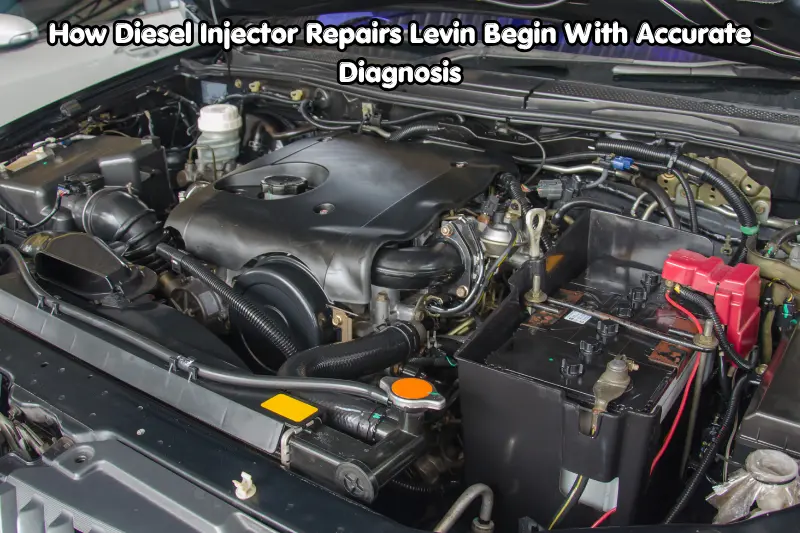
The best diesel injector repairs levin approach starts by gathering information about the fault. A technician or experienced diagnostician should consider when the problem occurs, whether warning lights are present, and whether the issue is constant or intermittent.
A typical diagnostic process may include the following steps:
- Confirm the reported symptoms.
- Perform a visual inspection of the engine and fuel system.
- Check for leaks, damaged hoses, and loose electrical connections.
- Read diagnostic trouble codes using a suitable diagnostic scanner.
- Review live sensor data where appropriate.
- Test fuel-system pressure and related components.
- Perform injector-specific testing when the evidence points in that direction.
- Confirm the repair after corrective work is completed.
This process is more reliable than replacing parts based on a single fault code or symptom.
Testing Methods Used for Diesel Injector Diagnosis
Several testing methods can help determine whether an injector is operating correctly. The appropriate method depends on the engine and fuel-system design.
Diagnostic Scanner Checks
A diagnostic scanner can retrieve diagnostic trouble codes and provide useful live data. Depending on the vehicle, information may include fuel pressure, sensor readings, injector correction values, and other engine operating conditions.
A scanner is a valuable tool, but it has limitations. A trouble code often identifies a system or condition that requires further investigation. It does not always prove that one particular part has failed.
Electrical Testing
Modern injectors and their control circuits may require electrical testing. This can involve checking wiring integrity, connector condition, resistance or circuit behaviour according to manufacturer procedures.
Electrical faults can sometimes imitate mechanical injector problems. Corrosion, damaged wiring, loose connectors, and poor connections can all affect engine performance.
Fuel Pressure and Flow Testing
The fuel system must supply fuel at the correct pressure and volume. A fuel-delivery issue may affect one or more cylinders and create symptoms similar to injector problems.
Testing may involve checking the fuel filter, supply lines, fuel pump operation, pressure regulation, and system leaks.
Injector-Specific Testing
Depending on the engine, injector testing may involve examining return flow, balance, spray performance, or other manufacturer-approved measurements. Professional equipment can provide a more complete picture than visual inspection alone.
When diesel injector repairs levin are being considered, confirming the fault before repair is one of the most effective ways to avoid unnecessary costs.
Common Causes of Diesel Injector Failure
Diesel injectors operate in demanding conditions. Their performance can be affected by contamination, wear, heat, pressure, and problems elsewhere in the engine.
Fuel Contamination
Water, dirt, and other contaminants can damage sensitive fuel-system components. Contaminated fuel may affect injector performance and cause corrosion or wear.
Using appropriate fuel-handling practices and maintaining the fuel system can reduce the risk of contamination-related problems.
Normal Wear
Over time, internal injector components can wear. The effects may include poor fuel control, reduced efficiency, and uneven engine operation.
The rate of wear varies according to vehicle use, maintenance practices, fuel quality, and operating conditions.
Fuel-System Problems
An injector may not be the root cause of a fuel-related fault. Problems with fuel pressure, pumps, filters, regulators, or air entering the system can affect how the engine runs.
For this reason, diesel injector repairs levin should include consideration of the complete fuel system rather than focusing only on one component.
Warning Lights and Diagnostic Trouble Codes
An engine warning light should be treated as a signal to investigate, not as a diagnosis by itself. The vehicle’s electronic control system may detect an operating condition outside its expected range and store a diagnostic trouble code.
A code can provide a useful starting point, but additional testing is often necessary. For example, a code related to cylinder performance could potentially involve fuel delivery, compression, wiring, sensors, or other engine conditions.
Good diagnostic practice includes checking:
- The exact stored codes
- Freeze-frame or operating information when available
- Live data
- Related systems
- Physical component condition
- Manufacturer diagnostic procedures
Clearing a code without identifying the underlying problem may only cause the warning light to return later.
Diesel Engine Troubleshooting Beyond the Injectors
A complete approach to diesel injector repairs levin should consider other systems that influence combustion and engine performance.
Turbocharger Problems
Turbocharger faults can cause power loss, smoke, unusual noises, and reduced engine response. A boost leak or control problem may feel similar to a fuel-system fault.
Checking the air intake, intercooler pipes, boost system, and relevant sensors can help separate turbocharger faults from injector problems.
Sensor Problems
Diesel engines depend on sensors to monitor pressure, temperature, airflow, crankshaft position, and other operating conditions. Incorrect sensor readings can affect fuel delivery and engine management.
A sensor should not be replaced solely because it appears in a trouble code. Wiring, connectors, reference values, and related systems may also need inspection.
Electrical Faults
Electrical faults can be intermittent and difficult to identify. Heat, vibration, moisture, and damaged wiring can create poor connections.
A careful electrical inspection may be necessary when diesel injector repairs levin do not fully explain the symptoms.
When Is Professional Diesel Diagnosis Necessary?
Professional diagnosis is advisable when symptoms are severe, persistent, or difficult to identify. Modern diesel systems can operate under very high pressure and often require specialised tools and manufacturer-specific testing procedures.
Professional help can be particularly useful when:
- The engine will not start
- There is a major loss of power
- Multiple warning lights are active
- Fuel leaks are present
- The problem is intermittent
- High-pressure fuel-system work is required
- Previous repairs have not solved the fault
Diesel injector repairs levin can involve both mechanical and electronic systems, so a structured diagnostic approach is generally safer than trial-and-error parts replacement.
Maintenance Tips to Reduce Injector and Fuel-System Problems
Regular maintenance can help identify problems before they become more serious. Maintenance requirements vary between vehicles, so the manufacturer’s service schedule should always guide decisions.
Useful practices include keeping fuel clean, replacing filters at recommended intervals, addressing warning lights promptly, and checking for leaks or damaged connections.
Other practical habits include:
- Using the correct fuel for the vehicle
- Avoiding contaminated fuel sources
- Maintaining the air-intake system
- Monitoring unusual smoke or engine noises
- Investigating persistent starting problems
- Keeping service records
Preventive maintenance cannot eliminate every failure, but it can reduce avoidable problems and support early detection.
Common Mistakes to Avoid During Diesel Injector Repairs Levin
One of the most common mistakes is assuming that an injector is faulty based only on a symptom. Rough running or power loss can originate from several systems.
Another mistake is relying entirely on a diagnostic scanner. Scan tools provide useful information, but their results need to be interpreted alongside physical inspection and testing.
Other mistakes include:
- Replacing multiple expensive parts without confirming the fault
- Ignoring fuel contamination
- Failing to inspect electrical connectors
- Reusing damaged seals or components where replacement is required
- Using unsuitable tools
- Working on high-pressure fuel systems without proper knowledge
Careful diagnosis before repair can save time and reduce the chance of repeated work.
Safety Considerations for Diesel Fuel-System Work
Diesel fuel systems require careful handling. High-pressure systems can present serious risks if opened or tested incorrectly. Fuel leaks can also create fire hazards and should never be ignored.
Use suitable personal protective equipment and follow manufacturer procedures. Allow hot engine components to cool before working near them, and keep ignition sources away from fuel.
For broader roadworthiness and vehicle-safety information, the Waka Kotahi NZ Transport Agency provides authoritative guidance relevant to safe vehicle operation and transport requirements.
If the repair requires opening or testing a high-pressure fuel system, professional assistance is the safest option.
Practical Example of a Diesel Diagnosis Process
Imagine a diesel vehicle that has reduced power and an engine warning light. Replacing an injector immediately would be premature.
A better process would begin by reading diagnostic trouble codes and inspecting the engine. The technician could then review live data, check the air and fuel systems, inspect electrical connections, and test fuel pressure where appropriate.
If the evidence points toward a specific injector, further injector testing can confirm whether repair or replacement is justified.
This type of process shows why diesel injector repairs levin are most effective when the work follows evidence instead of guesswork.
Benefits and Limitations of Modern Diesel Diagnostics
Modern vehicle diagnostics can identify faults more efficiently than visual inspection alone. Diagnostic scanners can access electronic systems, while live data can help technicians understand engine behaviour.
The benefits include faster fault identification, better system monitoring, and a more structured repair process.
However, diagnostics have limitations. A scanner cannot physically inspect every component, and a trouble code may identify a symptom rather than the root cause. Accurate diesel engine diagnosis still requires technical knowledge, testing procedures, and practical judgement.
Diesel Injector Repairs Levin for Long-Term Engine Reliability
Long-term engine reliability depends on more than repairing a single fault. A successful repair should consider the condition that caused the failure and whether other parts of the fuel or engine-management system may be affected.
After diesel injector repairs levin are completed, the engine should be checked to confirm that the original symptoms have been resolved. Relevant fault codes, operating data, starting behaviour, idle quality, and road performance may all need review.
This final verification helps confirm that the repair addressed the actual problem rather than temporarily masking it.
Frequently Asked Questions
What does diesel fault diagnosis involve?
Diesel fault diagnosis involves identifying the real cause of an engine problem through inspection, diagnostic trouble codes, live data, and targeted testing. It can cover fuel-system faults, electrical faults, sensors, turbocharger problems, and mechanical issues. The goal is to confirm the cause before replacing components.
What are the most common diesel engine problems?
Common diesel engine problems include difficult starting, rough running, power loss, excessive smoke, warning lights, fuel-system faults, sensor issues, electrical problems, and turbocharger faults. Similar symptoms can have different causes, so testing is needed to identify the correct repair.
Can a diagnostic scanner identify a bad injector?
A diagnostic scanner can provide useful fault codes and live data, but it may not prove that an injector has failed. Injector-specific testing, fuel-system checks, and electrical diagnosis may also be required. This is why diesel injector repairs levin should not be based on scanner information alone.
What should I do if my diesel engine loses power or shows a warning light?
Check for obvious safety concerns and avoid ignoring persistent warning lights or severe power loss. The vehicle should be diagnosed using appropriate testing procedures. Possible causes include fuel restrictions, injector problems, turbocharger faults, sensors, or electrical issues.
When should I seek professional diesel diagnosis?
Professional diesel diagnosis is recommended when the engine will not start, has significant power loss, develops recurring warning lights, leaks fuel, or requires high-pressure fuel-system testing. Professional equipment and procedures can help confirm faults and reduce the risk of unnecessary repairs.
Conclusion
Accurate diagnosis is the foundation of effective diesel engine repair. Symptoms such as rough running, power loss, smoke, warning lights, and difficult starting may involve injectors, fuel pressure, sensors, electrical circuits, or turbocharger systems. Testing the complete system before replacing components helps identify the real cause and supports safer, more efficient repairs.
For drivers and operators dealing with engine performance concerns, diesel injector repairs levin should always be approached with structured inspection, suitable testing, and professional support when the work involves complex or high-pressure systems. For a practical next step, visit Truck Mechanic Levin to explore relevant mechanical service information.
